

Accounting Process for Growing Businesses
As businesses grow, so do their financial complexities. What once worked as simple bookkeeping—tracking expenses, sending invoices, and reconciling bank statements—quickly becomes insufficient. At this point, founders and business owners begin to feel the strain: cash flow becomes harder to predict, compliance requirements increase, and financial reports arrive too late to support critical decisions. This is where a well-defined accounting process becomes essential.
Understanding the accounting process meaning goes beyond recording numbers. It refers to a structured, end-to-end system that captures, organizes, analyzes, and reports financial data in a way that supports business growth. Without a scalable accounting business process, even profitable companies can struggle with poor visibility, inefficient operations, and costly financial mistakes.

During growth stage accounting, businesses must move from reactive record-keeping to proactive financial management. Expansion introduces new challenges such as managing multiple revenue streams, controlling expenses, meeting regulatory obligations, and delivering accurate financial insights to stakeholders. Weak accounting systems at this stage often lead to poor decisions, missed opportunities, and unnecessary risks. For more information about our Accounting & Outsourcing Services, please visit our Accounting & Outsourcing Services page.
What Is the Accounting Process in a Growing Business?
To manage finances effectively, business owners must clearly understand the accounting process meaning and how it supports growth. At its core, the meaning of accounting process refers to a structured sequence of activities used to record, classify, summarize, and interpret financial transactions. In simple terms, accounting is the process that transforms raw financial data into meaningful insights that help businesses make informed decisions.
Many growing businesses confuse bookkeeping with accounting, but the two are not the same. Bookkeeping focuses on recording daily transactions such as sales, expenses, and payments. Accounting, on the other hand, goes further—it analyzes this data, applies accounting principles, prepares financial statements, and evaluates business performance. When you describe accounting process accurately, it includes both recording transactions and interpreting what those numbers mean for the business.
The Accounting Cycle Explained Simply
The accounting process follows a logical cycle, including:
- Identifying and recording financial transactions
- Classifying entries into relevant accounts
- Adjusting and reconciling balances
- Preparing financial statements and reports
As businesses grow, this process must evolve. Increased transaction volume, multiple revenue streams, regulatory requirements, and stakeholder expectations make accuracy and timeliness critical. Delayed or inaccurate financial information can lead to poor cash flow management, compliance issues, and missed growth opportunities.
A well-defined accounting process ensures that financial data is reliable, up to date, and decision-ready—making it a foundational element of sustainable business growth.
Why Accounting Processes Must Evolve as Your Business Grows
As a business expands, financial operations become more complex and interconnected. What worked in the early stages—basic spreadsheets or ad-hoc bookkeeping—often fails during expansion. Without a well-defined accounting business process, growing businesses expose themselves to financial risks that can slow growth or even threaten sustainability. This is why growth stage accounting requires a more structured and disciplined approach.
Growth Risks Without Proper Accounting
When accounting systems do not evolve alongside the business, common challenges begin to surface:
- Financial data becomes fragmented and unreliable
- Reporting delays increase as transaction volumes grow
- Errors multiply due to manual processes and lack of controls
These issues directly impact decision-making and operational stability.
How Poor Accounting Impacts Business Growth
An unstructured accounting framework affects critical areas such as:
- Cash flow: Inaccurate or delayed records lead to unexpected cash shortages and poor working capital management.
- Investor confidence: Investors and lenders rely on timely, accurate financial reports. Weak accounting reduces trust and limits access to funding.
- Tax compliance: Inefficient finance processes for SMEs increase the risk of filing errors, missed deadlines, and costly penalties.
- Strategic decisions: Without clear profitability and performance data, leaders struggle to evaluate expansion plans or control costs.
Key Pain Points Growing Businesses Face
- Delayed financial statements
- Unexpected cash flow surprises
- Compliance penalties and audit risks
- Inability to accurately measure profitability
A structured accounting process ensures financial clarity, supports compliance, and provides the insights needed to scale with confidence.
Key Components of an Effective Accounting Process
A strong accounting framework is built on clearly defined components that work together to support accuracy, compliance, and scalability. To truly explain accounting process requirements for growing businesses, it is important to look beyond theory and understand how each component fits into the accounting process steps in practice. These components collectively form the stages in accounting process, creating a reliable and repeatable step by step accounting process that evolves with business growth.

Below are the core components that make up an effective and scalable accounting procedure.
1. Chart of Accounts and Financial Structure
A strong accounting framework is built on clearly defined components that work together to support accuracy, compliance, and scalability. To truly explain accounting process requirements for growing businesses, it is important to look beyond theory and understand how each component fits into the accounting process steps in practice. These components collectively form the stages in accounting process, creating a reliable and repeatable step by step accounting process that evolves with business growth.
Below are the core components that make up an effective and scalable accounting procedure.
Purpose of a scalable chart of accounts:
- Delayed financial statements
- Unexpected cash flow surprises
- Compliance penalties and audit risks
- Inability to accurately measure profitability
Importance of proper categorization:
- Revenue: Tracks income by source, product, or service
- Expenses: Separates operational, administrative, and cost-related expenses
- Assets & liabilities: Ensures accurate tracking of what the business owns and owes
Best practices:
- Avoid excessive complexity in early stages
- Design accounts with future growth in mind
- Use standardized naming conventions
A well-structured chart of accounts ensures that the accounting process steps remain organized and scalable.
2. Recording Daily Financial Transactions
Recording transactions is one of the most visible stages in accounting process and the backbone of financial accuracy. This step captures the financial activity that drives all reporting and analysis.
Key transactions include:
- Sales and customer receipts
- Operating and administrative expenses
- Payroll and employee-related costs
- Banking transactions such as deposits and withdrawals
Why documentation matters:
- Creates a clear audit trail
- Supports tax and regulatory compliance
- Reduces errors and disputes
Accrual vs. cash accounting (briefly):
- Cash accounting: Records transactions when cash changes hands
- Accrual accounting: Records transactions when they are earned or incurred
Most growing businesses adopt accrual accounting as it provides a more accurate picture of financial performance and strengthens the overall accounting procedure.
3. Accounts Receivable Management
Accounts receivable (AR) management ensures that revenue earned is collected on time. Poor AR processes can strain cash flow even in profitable businesses.
Key elements of effective AR management:
- Timely and accurate invoicing
- Clearly defined credit terms
- Regular follow-ups on overdue payments
Why AR matters in the accounting process:
- Directly impacts liquidity and working capital
- Helps track customer payment behavior
- Reduces bad debt risk
Managing outstanding receivables, often measured through Days Sales Outstanding (DSO), is a critical accounting process step that supports predictable cash flow and financial stability.
4. Accounts Payable Management
Accounts payable (AP) management focuses on controlling outgoing payments while maintaining strong vendor relationships.
Core AP activities include:
- Processing vendor invoices
- Implementing approval workflows
- Scheduling payments strategically
Cash flow impact of payables:
- Paying too early can strain cash reserves
- Paying too late can damage vendor trust and incur penalties
A disciplined AP system ensures that obligations are met without compromising liquidity. This component plays a vital role in balancing inflows and outflows within the step by step accounting process.
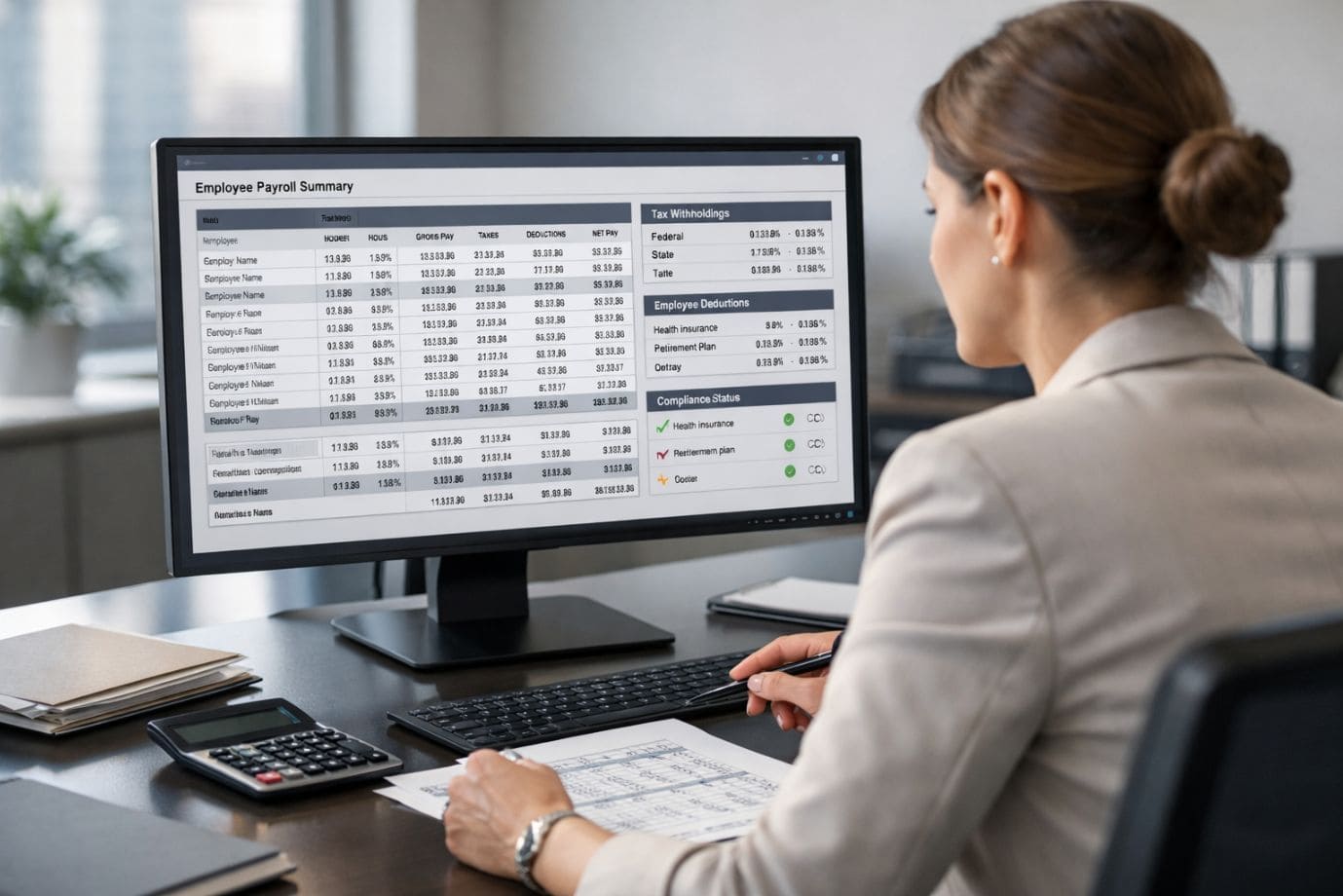
5. Payroll and Employee Expenses
Payroll is one of the most sensitive and compliance-heavy areas of the accounting procedure. Errors in this area can escalate quickly as the workforce grows.
Key payroll considerations:
- Accurate wage and salary calculations
- Timely tax withholdings and filings
- Proper handling of benefits, reimbursements, and deductions
Why payroll errors are risky:
- Legal and regulatory penalties
- Employee dissatisfaction and trust issues
- Misstated financial reports
Integrating payroll into the broader accounting process steps ensures consistency, compliance, and transparency as employee-related costs scale. For more information on how payroll outsourcing works, visit our dedicated blog on payroll outsourcing.
6. Month-End and Year-End Closing Process
The closing process consolidates financial activity into formal records and reports. It is one of the most critical stages in accounting process for ensuring accuracy and reliability.
Key closing activities include:
- Legal and regulatory penalties
- Employee dissatisfaction and trust issues
- Misstated financial reports
Why closing timelines matter:
- Delayed closes result in outdated financial information
- Faster closes support timely decision-making
- Consistent closing procedures reduce errors
A structured close reinforces the integrity of the accounting procedure and ensures that financial statements reflect the true financial position of the business.
7. Financial Reporting and Analysis
Financial reporting is the final outcome of the step by step accounting process and transforms data into actionable insights.
Core financial statements include:
- Income statement (profit and loss)
- Balance sheet
- Cash flow statement
Beyond basic reporting:
- Variance analysis compares actual results with budgets or forecasts
- Management reports highlight trends, risks, and opportunities
This component helps leadership explain accounting process outcomes in business terms, enabling informed strategic decisions. Accurate reporting closes the loop on the accounting process steps, making accounting a strategic asset rather than a back-office function.
Each of these components represents a vital part of the stages in accounting process. When integrated effectively, they create a scalable, reliable, and transparent accounting procedure that supports growth, compliance, and long-term success. For growing businesses, mastering these core components is essential to building a resilient financial foundation.
Choosing the Right Accounting Systems as You Scale
As businesses expand, manual tools and spreadsheets quickly become unreliable. While spreadsheets may work during early operations, they lack real-time visibility, audit trails, and scalability. For an effective accounting process for growing businesses, adopting the right accounting systems is no longer optional—it is essential to sustain growth and accuracy.
Modern cloud-based accounting platforms support a scalable accounting process by automating routine tasks and centralizing financial data. These systems reduce errors, improve efficiency, and provide instant access to financial insights from anywhere. Cloud accounting also ensures data security, real-time updates, and easier collaboration across teams and advisors.

System Integration for Growth
A truly scalable accounting processes depends on seamless integration with other business systems, including:
- Payroll: Ensures accurate wage calculations and tax compliance
- Inventory: Tracks stock levels and cost of goods sold in real time
- CRM: Aligns revenue data with customer activity
- Banking: Automates reconciliations and cash flow tracking
Accounting Systems by Growth Stage
- Startup: Basic cloud accounting and bank feeds
- Scaling: Integrated systems with automation and controls
- Mature: Advanced reporting, multi-entity support, and analytics
Automation strengthens financial control, speeds up reporting, and allows finance teams to focus on strategic decision-making rather than manual data entry.
Internal Controls and Compliance in Growing Businesses
As companies expand, financial risks increase alongside transaction volume and organizational complexity. Strong internal controls are a critical component of growth stage accounting, helping businesses maintain accuracy, transparency, and regulatory compliance. Without defined controls, even well-performing businesses can face fraud, reporting errors, and costly compliance failures.
Key Internal Control Elements
A robust control framework strengthens finance processes for SMEs by addressing common growth-related risks:
- Segregation of duties: Separating responsibilities for recording transactions, approving payments, and reconciling accounts reduces the risk of errors and fraud.
- Approval workflows: Clear authorization levels for expenses, vendor payments, and journal entries ensure accountability and consistency.
- Fraud prevention: Regular reconciliations, system access controls, and audit trails help detect irregularities early.
- Audit readiness: Documented processes, supporting documentation, and consistent reporting make audits smoother and less disruptive.
As businesses grow, regulators, investors, and lenders expect higher standards of financial control. Implementing internal controls early ensures compliance with tax laws and financial regulations while supporting operational discipline.
In growth stage accounting, internal controls are not just protective measures—they enable scalability by ensuring that financial data remains reliable, secure, and decision-ready as the organization evolves.
Accounting Metrics and KPIs to Track Growth
As businesses scale, financial visibility becomes a strategic necessity rather than a reporting exercise. Tracking the right accounting KPIs ensures that leadership can evaluate performance, control costs, and make informed expansion decisions. When supported by strong accounting systems for business growth, these metrics become reliable indicators of financial health within a scalable accounting process.
Key Accounting KPIs Every Growing Business Should Monitor
- Cash flow: Measures the ability to meet short-term obligations and fund operations. Positive cash flow is critical for sustaining growth without overreliance on debt.
- Gross margin: Indicates how efficiently a business delivers its products or services. Declining margins often signal rising costs or pricing issues.
- Net profit: Reflects overall profitability after all expenses, taxes, and interest. It shows whether growth is translating into real financial gains.
- Accounts receivable turnover: Assesses how quickly customers pay. Slow collections strain cash flow and weaken the accounting business process.
- Operating expenses ratio: Compares operating costs to revenue, helping identify inefficiencies as the business scales.
Together, these KPIs help evaluate whether current finance processes for SMEs are supporting sustainable expansion or creating hidden risks. A well-designed scalable accounting processes ensures these metrics are accurate, timely, and actionable.
Common Accounting Mistakes That Hold Growing Businesses Back
Despite growth ambitions, many businesses struggle due to avoidable accounting errors, including:
- Delaying upgrades to modern accounting systems
- Maintaining poor or inconsistent documentation
- Mixing personal and business finances
- Ignoring regular reconciliations
- Operating without professional accounting oversight
These mistakes weaken the scalable accounting process, reduce financial clarity, and limit the effectiveness of decision-making. Learn more about common accounting errors and how to avoid them in our dedicated blog.
Should Growing Businesses Outsource Accounting?
As financial operations become more complex, many businesses reach a point where internal resources are no longer sufficient. Deciding between in-house and outsourced accounting depends on the scale, complexity, and strategic needs of the accounting business process.
- In-house accounting: In-house accounting offers direct control and immediate access to financial data, making it suitable for businesses with high transaction volumes or complex reporting needs. However, it often comes with higher fixed costs, including salaries, benefits, training, and system investments.
- In-house accounting: Outsourced accounting provides access to experienced professionals—accountants, controllers, and CFOs or Virtual CFOs—at a fraction of the cost of a full internal team. These experts help design and manage scalable accounting processes, ensuring compliance, accurate reporting, and strategic financial guidance.
From a cost-versus-value perspective, outsourcing allows growing businesses to scale financial expertise on demand while maintaining flexibility. To learn how outsourced accounting can benefit your business, explore our dedicated blog on outsourced accounting.

Conclusion: Building an Accounting Process That Supports Sustainable Growth
An effective accounting process does far more than record transactions—it acts as a catalyst for business growth, financial visibility, and informed decision-making. For expanding organizations, a scalable accounting process becomes a strategic advantage rather than a routine back-office function. It enables accurate reporting, strengthens compliance, and delivers real-time insights that support cash flow management, tax planning, and performance evaluation. With structured systems and expert oversight, financial operations become reliable, transparent, and future-ready—forming a strong foundation for long-term success.
If you’re looking to strengthen your accounting framework and gain better financial visibility, working with experienced accounting professionals can help you design structured, scalable systems aligned with business growth—such as those followed by firms like Kamvisors Global LLP.
At Kamvisors Global LLP, we deliver end-to-end financial solutions tailored to businesses at every stage of growth—from bookkeeping, payroll, and MIS reporting to audit support, compliance services, and strategic advisory. Backed by CA-led expertise and a strong commitment to ethics and transparency, Kamvisors helps businesses build scalable accounting processes that support sustainable growth and confident decision-making. For more information on our financial services, please visit our Homepage.
Frequently Asked Questions (FAQs)
Q. What is the accounting process and why is it important for growing businesses?
A. The accounting process is a structured method of recording, classifying, and reporting financial transactions. For growing businesses, a strong accounting process ensures accurate reporting, better cash flow control, compliance, and informed decision-making. Without a scalable accounting framework, growth often leads to financial confusion and risk.
Q. What is the meaning of accounting process in a business context?
A. The meaning of accounting process refers to the step-by-step system used to track financial activity, prepare financial statements, and analyze business performance. In an accounting business process, this structure helps transform raw data into actionable financial insights.
Q. How does the accounting process differ from bookkeeping?
A. While bookkeeping focuses on recording daily transactions, the accounting process goes beyond data entry. It includes analysis, adjustments, financial reporting, and interpretation. In growth stage accounting, this distinction becomes critical as businesses need strategic insights, not just transaction records. For more information, visit our dedicated blog on the difference between accounting and bookkeeping.
Q. Why do growing businesses need a scalable accounting process?
A. A scalable accounting process allows financial systems to grow alongside the business. As transaction volumes increase, scalable accounting processes help maintain accuracy, efficiency, compliance, and real-time visibility—essential for sustainable expansion.
Q. What accounting KPIs should growing businesses track?
A. Key KPIs include cash flow, gross margin, net profit, accounts receivable turnover, and operating expense ratios. These metrics help evaluate whether existing scalable accounting processes are supporting profitability and operational efficiency.