
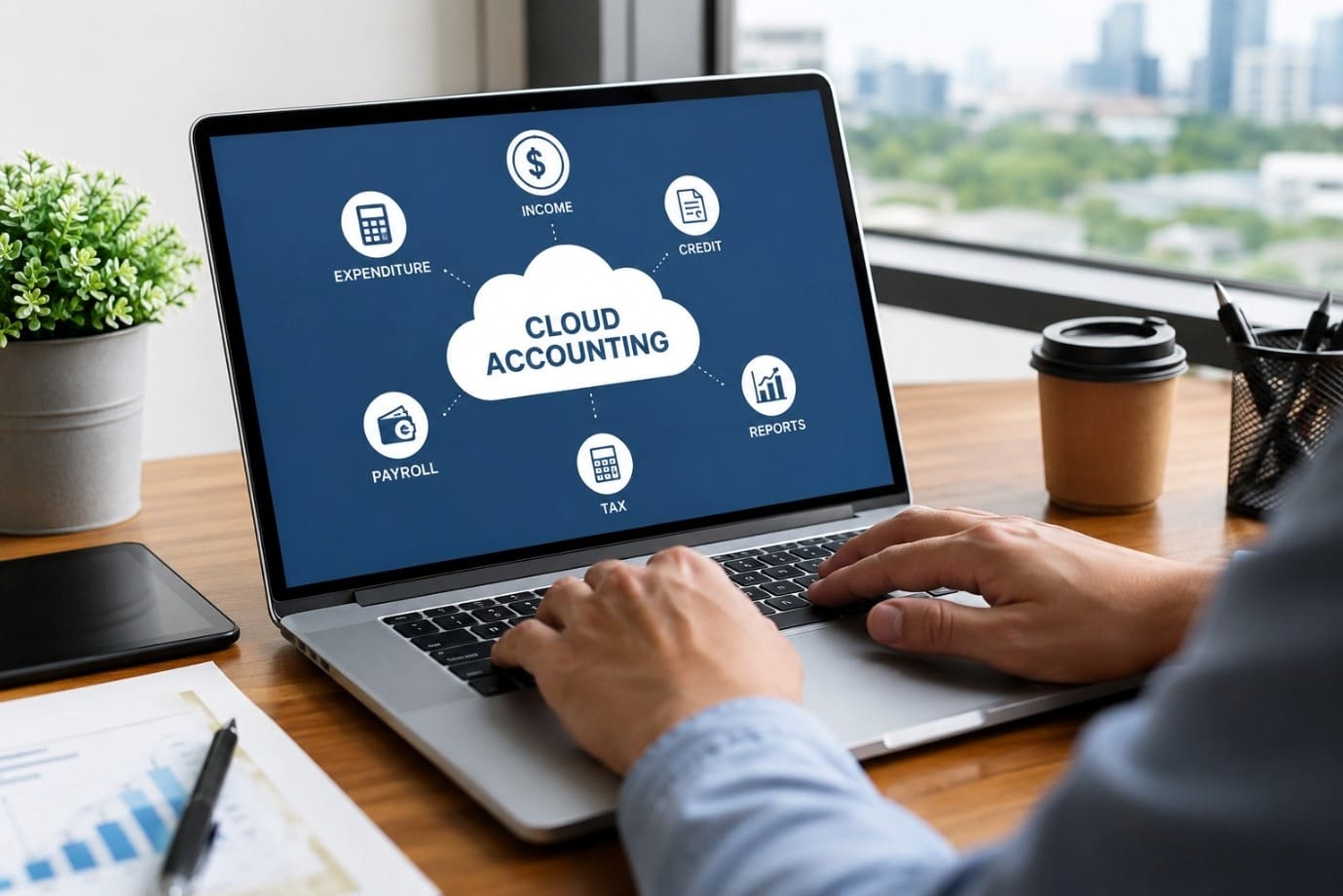
Cloud Accounting
The way businesses manage their finances has evolved significantly over the past decade. Traditional accounting systems, which often rely on manual processes, desktop-based applications and location-specific access, are gradually being replaced by smarter and more efficient solutions such as cloud accounting, cloud based accounting software and modern cloud accounting platforms. As organizations embrace remote work, expand across multiple locations and seek faster decision-making capabilities, the demand for real-time financial information has become more critical than ever.
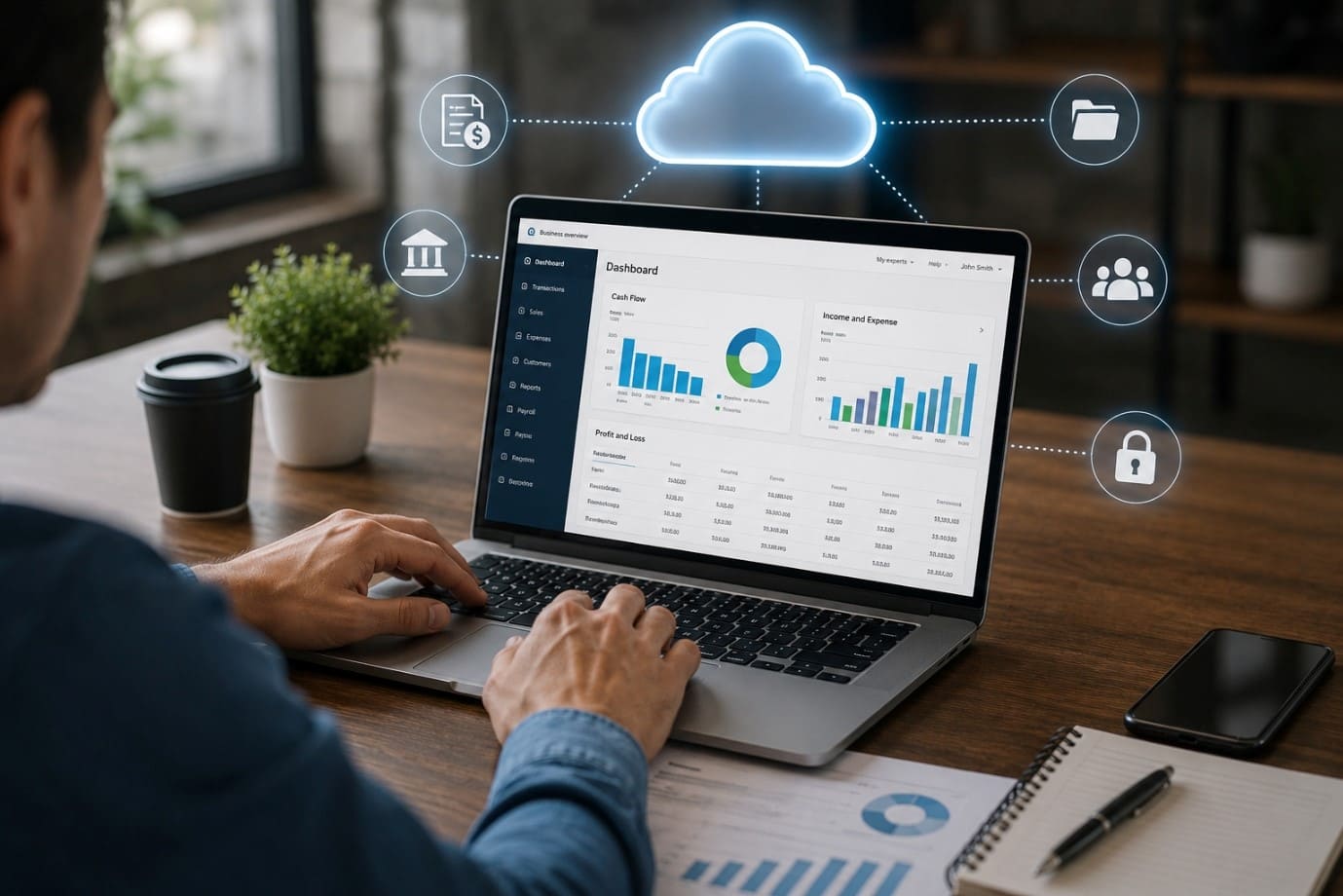
This growing need for flexibility and transparency has accelerated the adoption of cloud accounting solutions across industries. By leveraging cloud based accounting software, businesses can securely access their financial data anytime and from anywhere, enabling seamless collaboration between business owners, accountants, finance teams and advisors. Unlike conventional accounting systems, modern cloud accounting platforms provide real-time insights, automated workflows, enhanced data security and improved financial visibility.
For start-ups and growing enterprises, investing in the right cloud accounting software is no longer just a technological upgrade, it is a strategic business decision. Whether it is streamlining bookkeeping processes, managing cash flow, ensuring regulatory compliance or generating accurate financial reports, accounting on cloud empowers businesses to operate more efficiently and make data-driven decisions. In fact, many organizations are now turning to cloud accounting software to reduce costs, improve scalability and eliminate the limitations of traditional accounting infrastructure.
In this comprehensive blog, we will explore what cloud accounting is, how it works, its key features, implementation considerations and the most significant cloud accounting benefits for modern businesses. By the end of this blog, you will have a clear understanding of how cloud-powered financial management can drive efficiency, growth and long-term business success.
Understanding Cloud Accounting
Cloud accounting refers to the practice of managing financial records, transactions, and accounting processes through internet-based systems rather than locally installed software. Unlike traditional accounting methods, cloud accounting allows businesses to access their financial information from anywhere, at any time, using a secure internet connection.
A modern cloud accounting software stores financial data on remote servers, enabling real-time access, collaboration and automated updates. This means business owners, accountants and financial advisors can work on the same data simultaneously without worrying about version mismatches or manual data transfers.
Key Components of Cloud Accounting
Some of the essential features that power cloud accounting include:
- Cloud Storage: Securely stores financial data without relying on local systems.
- Real-Time Data Synchronization: Automatically updates financial information across all connected users.
- Online Dashboards: Provides instant visibility into cash flow, expenses, revenue and financial performance.
- Automated Workflows: Streamlines invoicing, bank reconciliation, expense tracking and reporting.
- Secure Access Controls: Protects sensitive financial information through role-based permissions and advanced security protocols.
These capabilities contribute significantly to the overall cloud accounting benefits, helping businesses improve efficiency, accuracy and decision-making.
How Cloud Accounting Works
Cloud accounting uses internet-based technology to manage, process, and store financial data in real time. Unlike traditional accounting systems, cloud accounting software enables businesses to access financial information from anywhere while automating routine accounting tasks. By leveraging cloud based accounting software, organizations can improve efficiency, accuracy and collaboration across their finance functions. To understand how the system operates, let’s explore the key processes that power modern cloud accounting platforms.
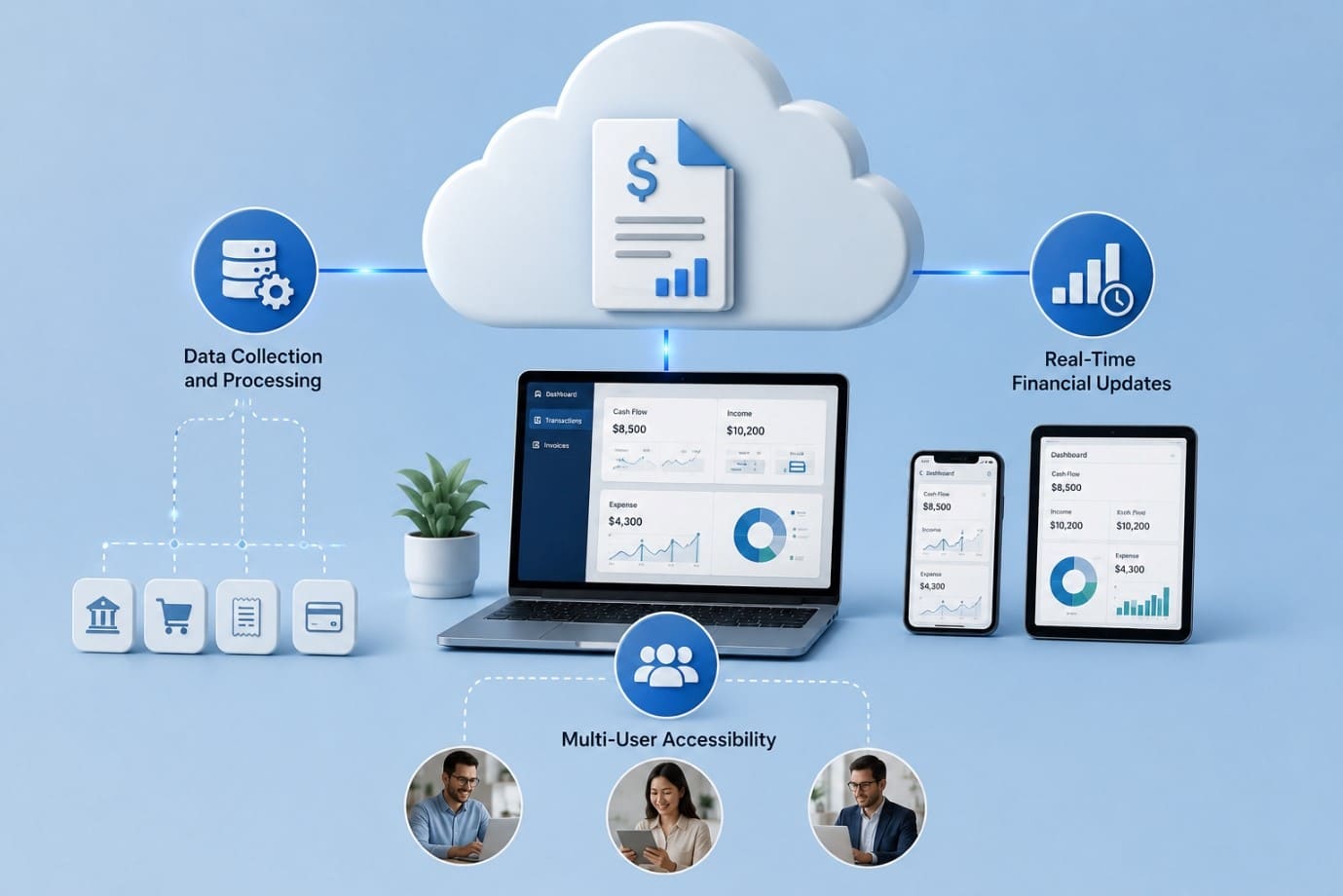
Data Collection and Processing
At its core, cloud accounting simplifies the way financial data is captured, processed, and managed. Modern cloud accounting software automatically collects information from multiple sources, reducing manual data entry and minimizing the risk of errors. Businesses can efficiently manage invoices, track expenses and connect their banking systems through a centralized platform.
Key processes include:
- Invoice Management: Create, send and track invoices digitally in real time.
- Expense Tracking: Record and categorize business expenses automatically.
- Bank Integrations: Sync bank accounts and financial transactions directly with cloud based accounting software for accurate recordkeeping.
Real-Time Financial Updates
One of the biggest advantages of accounting on cloud is the ability to access up-to-date financial information whenever needed. Unlike traditional systems that require manual updates, cloud accounting platforms continuously synchronize data across the system.
This enables:
- Live Reporting: Generate real-time financial reports and performance dashboards.
- Automated Reconciliation: Match transactions automatically to reduce accounting workload.
- Instant Financial Visibility: Monitor cash flow, revenue, expenses and profitability without delays.
These capabilities are among the most valuable cloud accounting benefits, helping businesses make faster and more informed financial decisions.
Multi-User Accessibility
A major strength of cloud accounting software is its ability to support multiple users simultaneously. Whether it is accountants handling bookkeeping, business owners reviewing financial performance, CFOs analysing strategic metrics or auditors conducting reviews, everyone can securely access the same data through role-based permissions.
This collaborative approach makes cloud accounting software for small business and growing enterprises an efficient solution for managing finances, improving transparency and enhancing overall financial control.
Top Benefits of Cloud Accounting for Businesses
The growing adoption of cloud accounting is driven by its ability to improve financial management, streamline operations, and support business growth. Unlike traditional accounting systems, cloud accounting software provides businesses with greater flexibility, real-time access to financial data and enhanced operational efficiency. Below are some of the most significant cloud accounting benefits that make it a valuable investment for modern organizations.
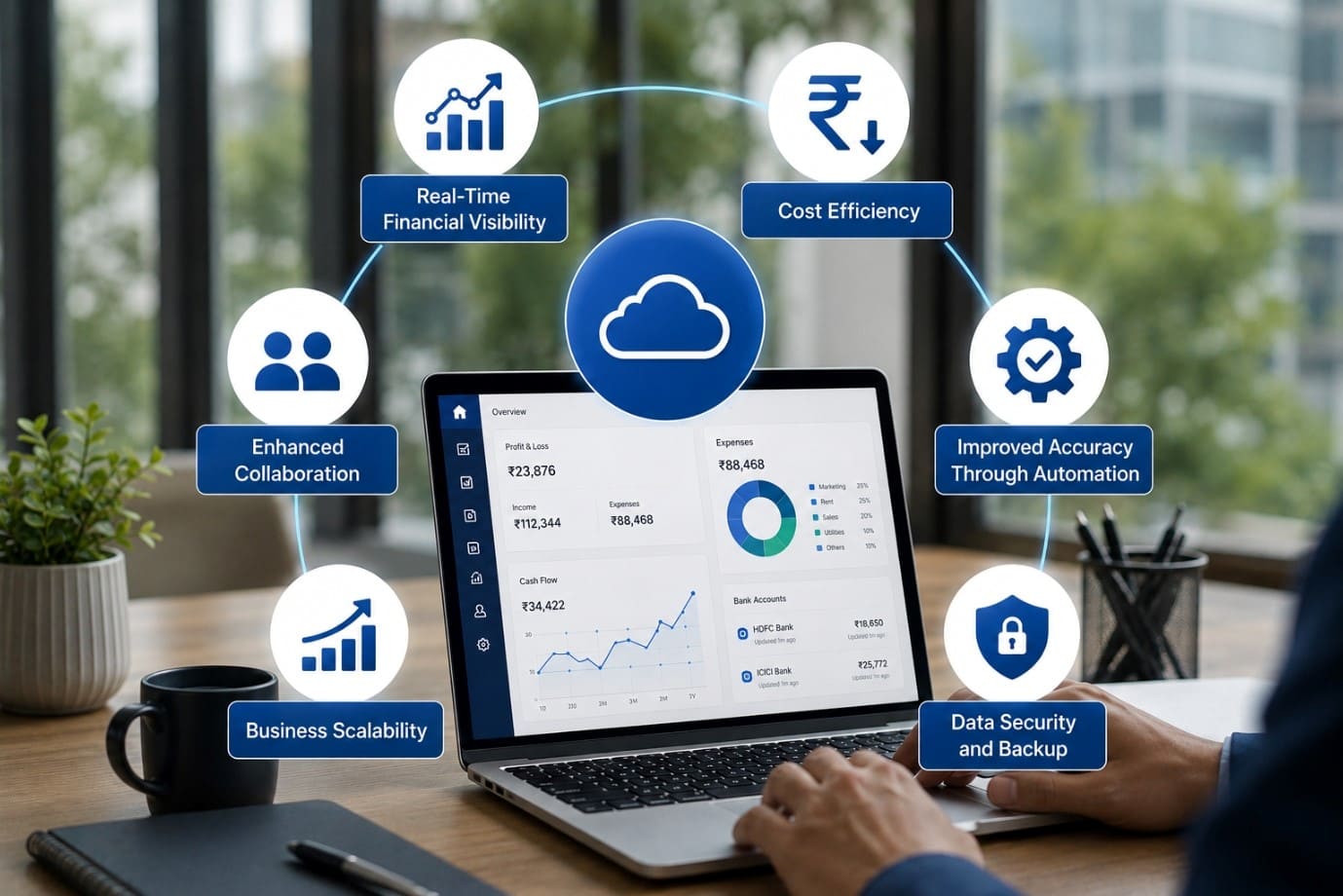
- Real-Time Financial Visibility: With accounting on cloud, businesses can access up-to-date financial information anytime. Real-time dashboards and reports help management make faster, data-driven decisions based on current business performance rather than outdated records.
- Cost Efficiency: Unlike traditional accounting infrastructure that requires dedicated servers, software installations and ongoing maintenance, cloud based accounting software reduces IT costs and eliminates expensive hardware investments.
- Improved Accuracy Through Automation: Automated transaction recording, reconciliation and reporting significantly reduce manual data entry and minimize the risk of accounting errors.
- Enhanced Collaboration: Modern cloud accounting platforms allow accountants, business owners, financial advisors and remote teams to access the same financial data simultaneously, improving communication and productivity.
- Business Scalability: As organizations grow, cloud accounting software can easily adapt to increasing transaction volumes, users and operational requirements without major system upgrades.
- Better Compliance Management: Automated GST calculations, tax reporting, audit trails and compliance tracking help businesses stay aligned with regulatory requirements and reduce compliance risks.
- Data Security and Backup: Leading cloud accounting software solutions use advanced encryption, secure access controls, automatic backups and disaster recovery mechanisms to protect sensitive financial information from loss or unauthorized access.
Cloud Accounting vs Traditional Accounting
As businesses increasingly embrace digital transformation, the debate between cloud accounting and traditional accounting systems has become more relevant than ever. While traditional accounting relies on locally installed software and manual processes, cloud accounting software offers real-time access, automation and greater operational flexibility. The growing adoption of cloud based accounting software is largely driven by its ability to improve collaboration, reduce infrastructure costs and provide better financial visibility. Understanding these differences can help businesses choose the right solution based on their current and future needs.
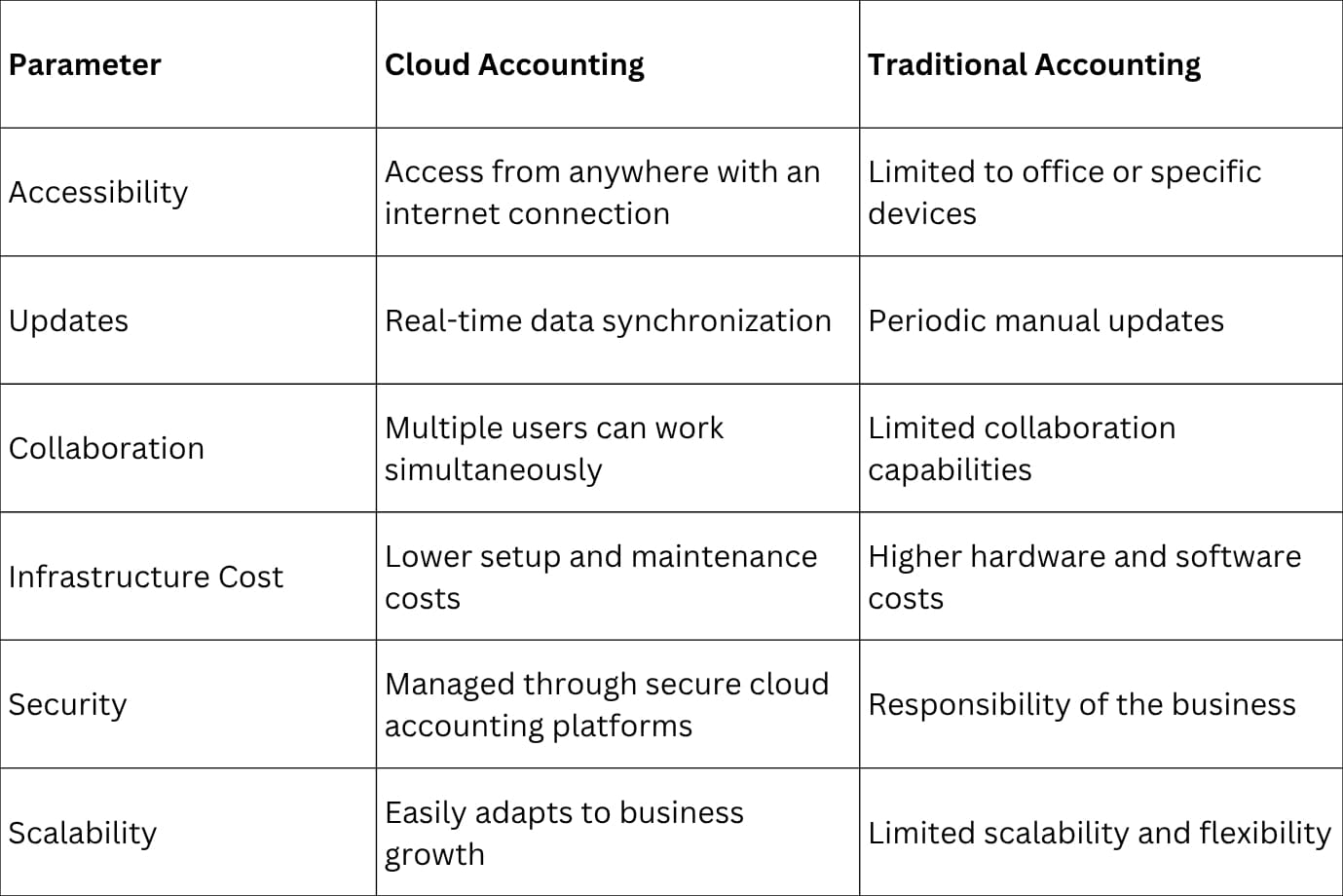
For start-ups and growing enterprises, accounting on cloud offers significant advantages in terms of efficiency and accessibility. These benefits, combined with the flexibility of cloud accounting software, make cloud-based solutions a preferred choice for modern financial management.
Why Start-ups and SMEs Are Adopting Cloud Accounting
As start-ups and SMEs navigate rapid growth, changing market conditions, and increasing compliance requirements, the need for smarter financial management has become essential. This is one of the primary reasons why cloud accounting is gaining widespread adoption among growing businesses. By leveraging cloud accounting software, organizations can access real-time financial data, improve operational efficiency and make informed business decisions without investing heavily in infrastructure.
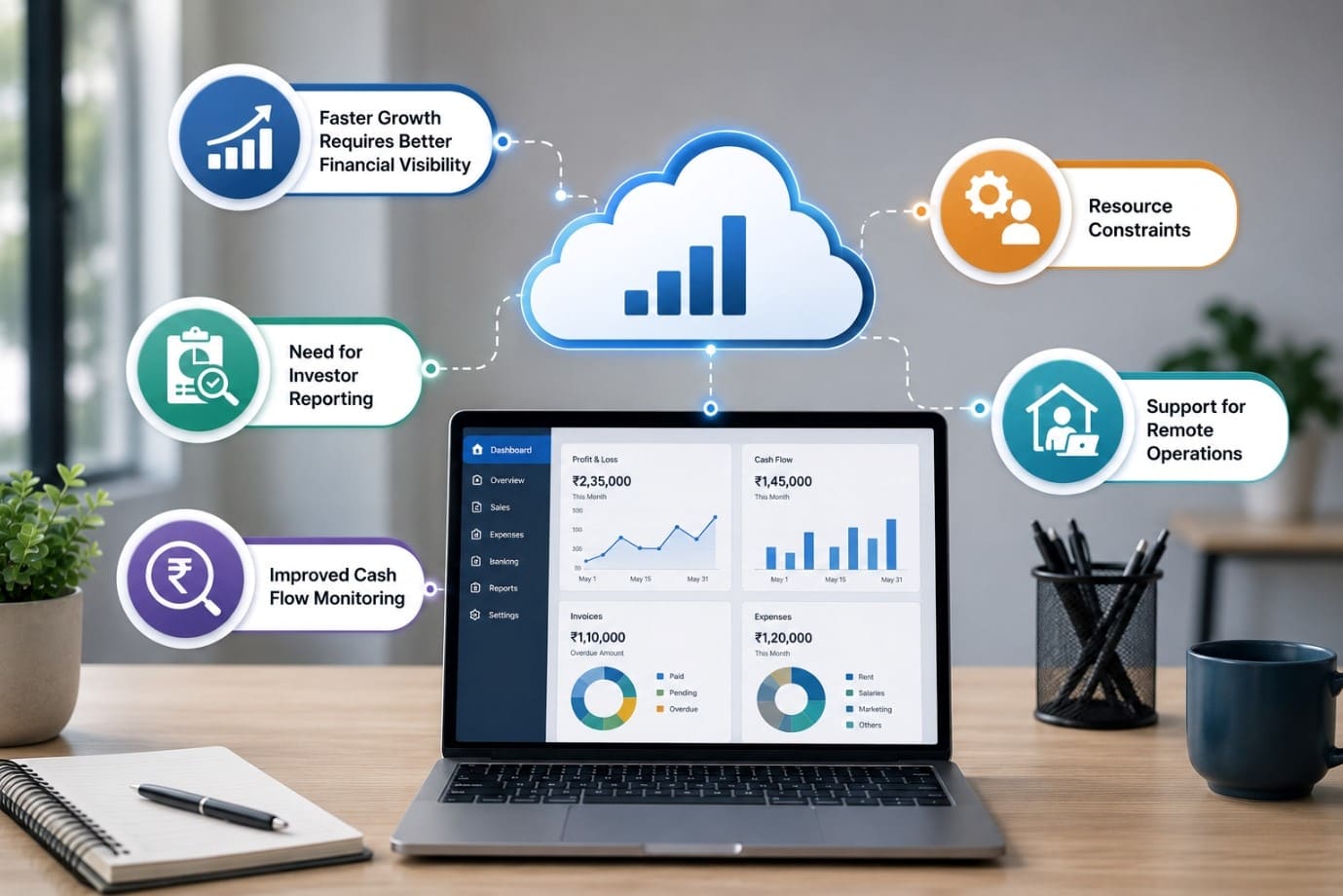
- Faster Growth Requires Better Financial Visibility: Growing businesses need instant access to financial insights to monitor performance, track profitability, and identify growth opportunities. Cloud accounting platforms provide real-time dashboards and reports that support faster and more strategic decision-making.
- Resource Constraints: Many start-ups operate with limited financial and human resources. Cloud accounting software helps reduce administrative workloads through automation, allowing teams to focus on core business activities.
- Need for Investor Reporting: Investors and stakeholders expect timely and accurate financial information. Accounting on cloud simplifies financial reporting and provides transparent, up-to-date records that support fundraising and investor confidence.
- Support for Remote Operations: Modern businesses often operate with distributed teams and external advisors. Cloud based accounting software enables seamless collaboration regardless of location.
- Improved Cash Flow Monitoring: One of the key cloud accounting benefits is real-time cash flow visibility. Businesses can track receivables, payables and expenses more effectively, helping them maintain financial stability and support sustainable growth.
Common Challenges in Cloud Accounting Implementation
While cloud accounting offers numerous advantages, transitioning from traditional systems to modern cloud accounting software can present certain challenges. Businesses must carefully plan the implementation process to ensure a smooth migration, user adoption, and long-term success. Understanding these potential obstacles can help organizations maximize the value of their investment and fully realize the cloud accounting benefits.
- Data Migration Issues: Migrating historical financial data from legacy systems to cloud based accounting software can be complex. Inaccurate data mapping, incomplete records or duplication of information may affect reporting accuracy if not handled properly.
- User Adoption Challenges: Employees accustomed to traditional accounting processes may initially resist change. Proper training and support are essential to help teams confidently use new cloud accounting platforms and leverage their full capabilities.
- Choosing the Right Platform: With numerous solutions available in the market, selecting the right cloud accounting software for small business or larger enterprises can be challenging. Businesses must evaluate scalability, features, compliance capabilities and integration requirements before making a decision.
- Security Concerns: Organizations often have concerns about storing sensitive financial information online. Although reputable cloud accounting software providers implement advanced security measures, businesses must still establish strong access controls and data governance practices.
- Integration Complexities: Integrating accounting on cloud with existing business applications such as CRM systems, payroll software and inventory management tools can sometimes require technical expertise.
Professional advisors and Virtual CFO consultants can play a critical role in overcoming these challenges by guiding platform selection, managing data migration, establishing internal controls and ensuring a seamless implementation process that aligns with business objectives. For more details, you can go through our dedicated page on Virtual CFO Service.
Best Practices for Successful Cloud Accounting Adoption
Implementing cloud accounting is not just about adopting new technology; it requires a strategic approach to ensure long-term success. By following best practices, businesses can maximize the value of their cloud accounting software and fully leverage the associated benefits.
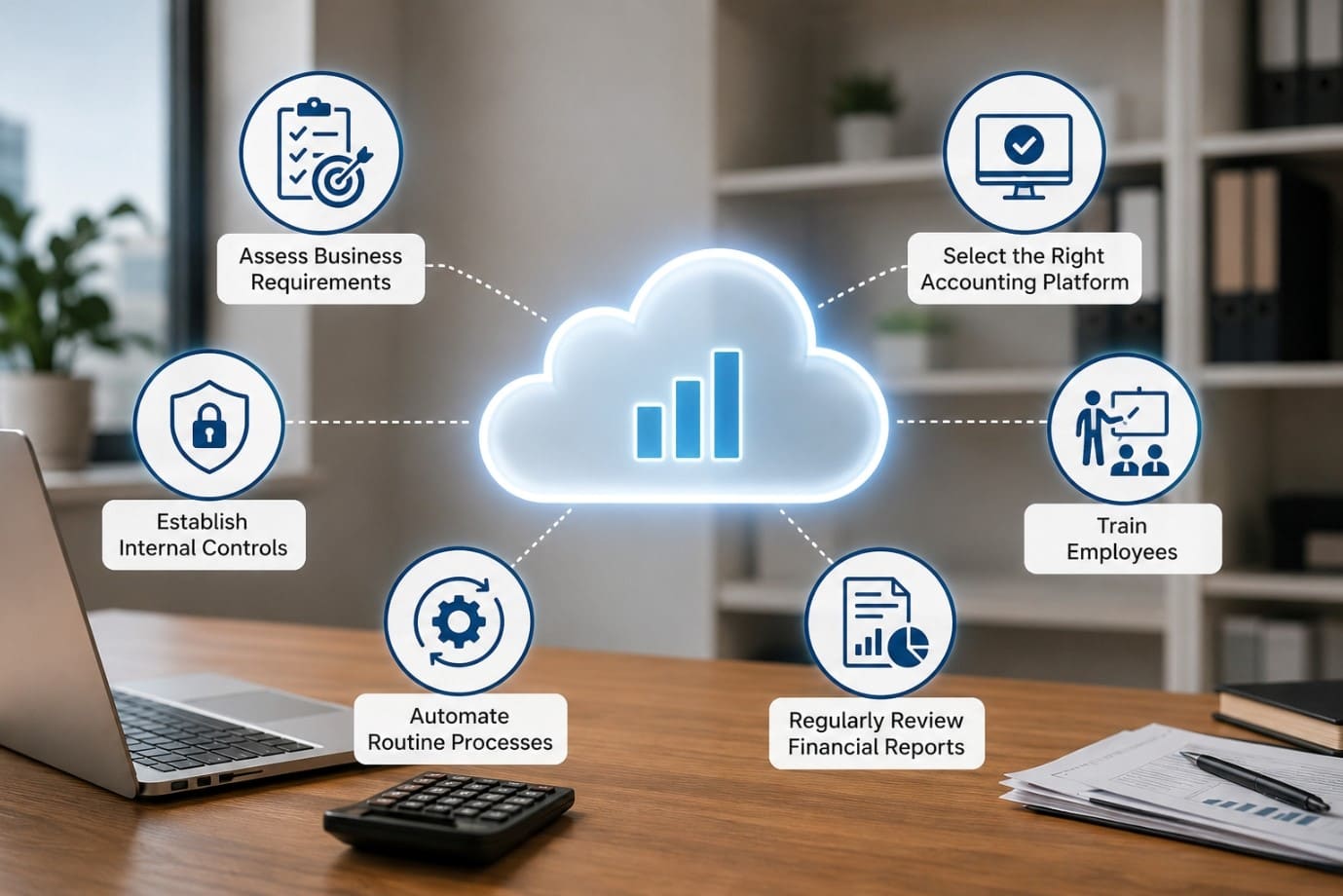

- Assess Business Requirements: Begin by evaluating your accounting needs, transaction volumes, reporting requirements and future growth plans before selecting a solution.
- Select the Right Accounting Platform: Choose cloud accounting platforms that align with your business size, industry requirements, compliance obligations and scalability goals. The right cloud accounting software for small business may differ from the needs of larger enterprises.
- Establish Internal Controls: Define approval workflows, user permissions and financial controls to maintain data accuracy and safeguard sensitive information.
- Train Employees: Provide adequate training to help employees adapt to accounting on cloud and utilize system features effectively.
- Automate Routine Processes: Leverage cloud based accounting software to automate invoicing, expense tracking, bank reconciliation and financial reporting, improving efficiency and reducing manual errors.
- Regularly Review Financial Reports: Monitor financial reports and performance dashboards regularly to identify trends, manage risks and support informed decision-making.
Following these practices helps businesses optimize their cloud accounting implementation while improving financial visibility, compliance and operational efficiency.
Future Trends in Cloud Accounting
As technology continues to evolve, cloud accounting is becoming more intelligent, automated and strategically valuable for businesses. Modern cloud accounting software is no longer limited to bookkeeping and reporting; it is transforming into a powerful decision-support tool that helps organizations improve efficiency, manage risks, and prepare for future growth. Businesses that embrace these innovations will be better positioned to maximize the long-term cloud accounting benefits.
- AI-Powered Accounting: Artificial intelligence is enabling cloud accounting platforms to automate data entry, categorize transactions, detect anomalies and improve financial accuracy.
- Predictive Financial Analytics: Advanced analytics tools help businesses forecast cash flow, identify trends and make proactive financial decisions based on real-time data.
- Intelligent Automation: Modern cloud based accounting software automates repetitive tasks such as invoicing, reconciliations, approvals and reporting, reducing administrative workloads.
- Real-Time Compliance Monitoring: Businesses can leverage accounting on cloud to monitor GST obligations, tax requirements and regulatory changes through automated compliance tracking and alerts.
- Integrated Financial Ecosystems: Future-ready cloud accounting software for small business and enterprises will increasingly integrate with CRM systems, payroll platforms, banking applications, inventory tools and payment gateways to create a connected financial ecosystem.
By adopting these emerging technologies, businesses can future-proof their finance functions and unlock the full potential of cloud accounting as a strategic growth enabler.
Conclusion:
As businesses continue to embrace digital transformation, cloud accounting is rapidly becoming the foundation of modern financial management. Throughout this blog, we have explored how cloud accounting software helps organizations streamline accounting processes, improve financial visibility, enhance compliance and support sustainable growth. From real-time reporting and automation to seamless collaboration and scalability, the advantages of accounting on cloud make it a valuable solution for businesses operating in an increasingly dynamic environment.
The growing adoption of cloud based accounting software reflects a broader shift toward smarter, data-driven financial management. Whether you are a start-up, SME or an expanding enterprise, investing in the right cloud accounting platforms can help improve operational efficiency, reduce manual workloads and provide better control over your financial performance. These long-term cloud accounting benefits not only strengthen day-to-day accounting functions but also support strategic business decision-making.
For organizations seeking to maximize the value of their accounting systems, technology should be complemented by expert financial guidance. Combining cloud accounting software for small business and growing enterprises with professional advisory and Virtual CFO services can provide deeper financial insights, stronger cash flow management, and improved business planning.
Ultimately, businesses that proactively adopt cloud accounting solutions today will be better equipped to navigate future challenges, seize growth opportunities and build a more agile, efficient and financially resilient organization.
For more information, explore our Homepage.
Frequently Asked Questions (FAQs)
Q1.What are the key cloud accounting benefits for businesses?
A. Some of the major cloud accounting benefits include real-time financial visibility, automated bookkeeping, reduced manual errors, enhanced collaboration, improved compliance management, data security and scalability. These advantages help businesses make informed financial decisions and improve operational efficiency.
Q2. Is cloud based accounting software secure for managing financial data?
A. Yes. Reputable cloud based accounting software providers use advanced security measures such as data encryption, multi-factor authentication, secure access controls and automated backups to protect sensitive financial information from unauthorized access and data loss.
Q3. Can cloud accounting software help with GST and tax compliance?
A. Yes. Most modern cloud accounting software solutions include features for GST calculations, tax reporting, invoice management, audit trails and compliance monitoring. This helps businesses maintain accurate records and meet regulatory requirements more effectively.
Q4. How does accounting on cloud improve collaboration?
A. Accounting on cloud allows accountants, business owners, CFOs, auditors and financial advisors to access the same financial data in real time. This improves communication, reduces delays and enables better coordination across teams and locations.
Q5. Can cloud accounting software integrate with other business applications?
A. Yes. Most cloud accounting software solutions can integrate with CRM systems, payroll software, inventory management tools, banking platforms and payment gateways. These integrations help create a connected financial ecosystem and improve operational efficiency.


Leave A Comment