

Working Capital- Building Financial Strength for Sustainable Business Success
Imagine reporting strong sales, healthy profits and a growing customer base, yet struggling to pay suppliers, employees or operational expenses on time. This challenge is often not caused by a lack of profitability but by ineffective management of working capital. Many businesses overlook the importance of determining working capital requirements until cash flow issues begin affecting daily operations. Even successful companies can face financial stress when funds are locked in inventory, receivables or inefficient processes. This is why regularly monitoring and calculating working capital are crucial for maintaining business continuity and supporting sustainable growth.

At its core, working capital represents the funds available to meet a company’s short-term obligations and operational needs. While profitability indicates how much a business earns, liquidity reflects its ability to access cash when required. A business can be profitable on paper but still struggle financially if it lacks sufficient working capital. The primary objective of working capital is to ensure a balance between liquidity and operational efficiency, enabling businesses to meet their commitments without disrupting growth plans.
Understanding the different types of working capital is equally important, as each serves a distinct purpose in managing day-to-day operations and future expansion. In this blog, we will explore the meaning, importance and types of working capital, explain the process of calculating working capital, discuss key metrics and provide practical insights for determining working capital needs. By the end, you will have a clear understanding of how effective management of working capital can strengthen cash flow, improve financial stability and drive long-term business success.
Understanding Working Capital
It refers to the difference between a company’s current assets and current liabilities, indicating its ability to meet short-term financial obligations and manage daily operations efficiently. Effectively calculating working capital helps businesses assess liquidity and maintain financial stability. The primary objective of working capital is to ensure sufficient funds are available for smooth business operations while supporting growth opportunities. Monitoring working capital also helps evaluate how efficiently a business utilizes its resources to generate revenue.
Components of Working Capital
It consists of two primary components: current assets and current liabilities.
- Current Assets: These are resources that can be converted into cash or utilized within one year. These typically include cash and bank balances, accounts receivable, inventory, short-term investments and prepaid expenses. Strong management of current assets plays a critical role in calculating working capital and improving overall liquidity.
- Current Liabilities: These are financial obligations that must be settled within one year. These include accounts payable, short-term borrowings, accrued expenses, taxes payable and other outstanding obligations. Understanding current liabilities is equally important when determining working capital, as they directly impact a company's ability to meet its short-term commitments and achieve the overall objective of working capital.
Types of Working Capital
Understanding the different types of working capital is essential for effective financial planning and liquidity management. Since every business has unique operational and growth requirements, different forms of working capital serve different purposes in supporting day-to-day activities and long-term objectives.
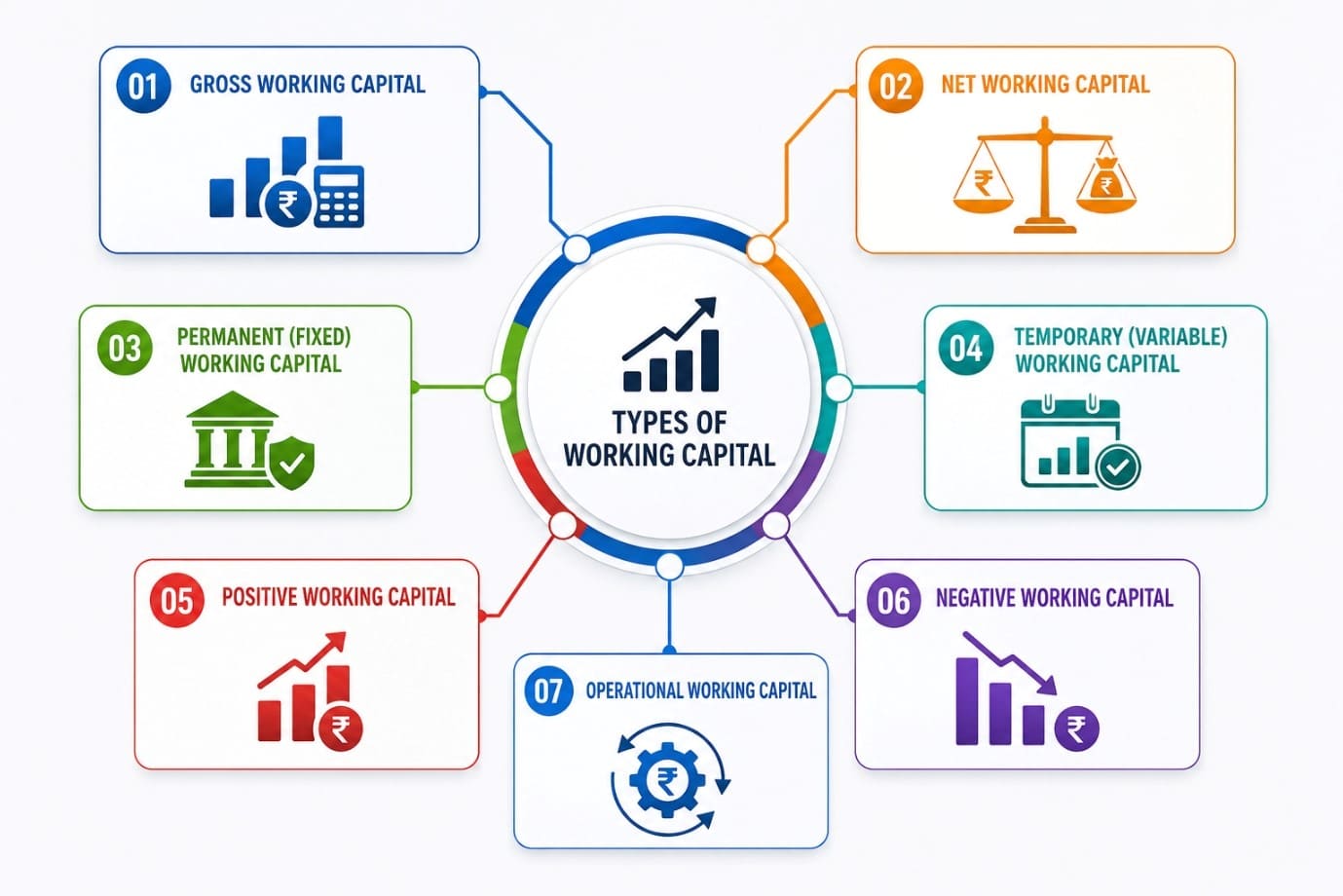
Gross Working Capital
Gross working capital refers to the total value of a company’s current assets, including cash, inventory, accounts receivable and short-term investments. It provides an overview of the resources available to meet short-term financial obligations and support business operations.
Net Working Capital
Net working capital represents the difference between current assets and current liabilities. In simple terms, working capital equals to Current Assets minus Current Liabilities. This measure helps businesses assess their short-term financial health and liquidity position.
Permanent (Fixed) Working Capital
Permanent working capital is the minimum amount of capital required to maintain uninterrupted business operations throughout the year. Regardless of fluctuations in sales or production levels, businesses need a certain level of inventory, cash and receivables to operate efficiently.
Temporary (Variable) Working Capital
Temporary working capital refers to the additional funds required during periods of increased business activity, seasonal demand, expansion projects or unexpected market opportunities. This type of working capital fluctuates based on operational requirements.
Positive Working Capital
Positive working capital exists when current assets exceed current liabilities. It indicates that a business has sufficient resources to meet its short-term obligations while maintaining operational flexibility and financial stability.
Negative Working Capital
Negative working capital occurs when current liabilities exceed current assets. While it may indicate liquidity concerns for some businesses, certain industries with strong cash collection cycles can operate effectively under this model.
Operational Working Capital
Operational working capital refers to the funds directly tied to core business activities, such as inventory, accounts receivable and accounts payable. Monitoring operational efficiency helps businesses optimize cash flow and improve profitability. Therefore, accurately determining requirements across these categories is crucial for maintaining liquidity and supporting sustainable business growth.
Why Working Capital is Important for Businesses
Working capital is the foundation of a company’s day-to-day operations and long-term financial health. Whether it is a large corporation or small business or new business, maintaining adequate liquidity is essential for operational success. The primary objective is to ensure that businesses have sufficient funds to meet short-term obligations while supporting growth opportunities.

- Daily Operations: Adequate working capital enables businesses to manage routine expenses such as inventory purchases, utility bills, transportation costs and other operational requirements without disruption.
- Vendor Payments: Timely supplier payments help maintain strong vendor relationships and ensure an uninterrupted supply of goods and services. Properly determining working capital requirements helps businesses avoid payment delays and operational bottlenecks.
- Employee Salaries: Employees are a company's most valuable asset. Sufficient net working capital ensures that salaries, wages and employee benefits are paid on time, contributing to workforce stability and productivity.
- Business Growth: Business expansion often requires additional investment in inventory, production capacity and marketing activities. Regularly calculating working capital helps organizations identify funding requirements and capitalize on growth opportunities effectively.
- Creditworthiness: Lenders and investors assess a company's liquidity before extending financial support. Strong working capital demonstrates efficient resource utilization and improves credibility with financial institutions.
- Financial Stability: Regardless of the type of working capital a business utilizes, maintaining an optimal level of liquidity helps manage unexpected expenses, market fluctuations and economic uncertainties. Ultimately, effective working capital management strengthens cash flow, enhances resilience and supports sustainable business success.
Understanding the Working Capital Cycle
The working capital cycle represents the continuous flow of funds through a business’s day-to-day operations. It measures the time taken to convert investments in inventory into cash through sales and collections. A shorter and more efficient cycle improves liquidity, strengthens cash flow and enhances overall business performance.
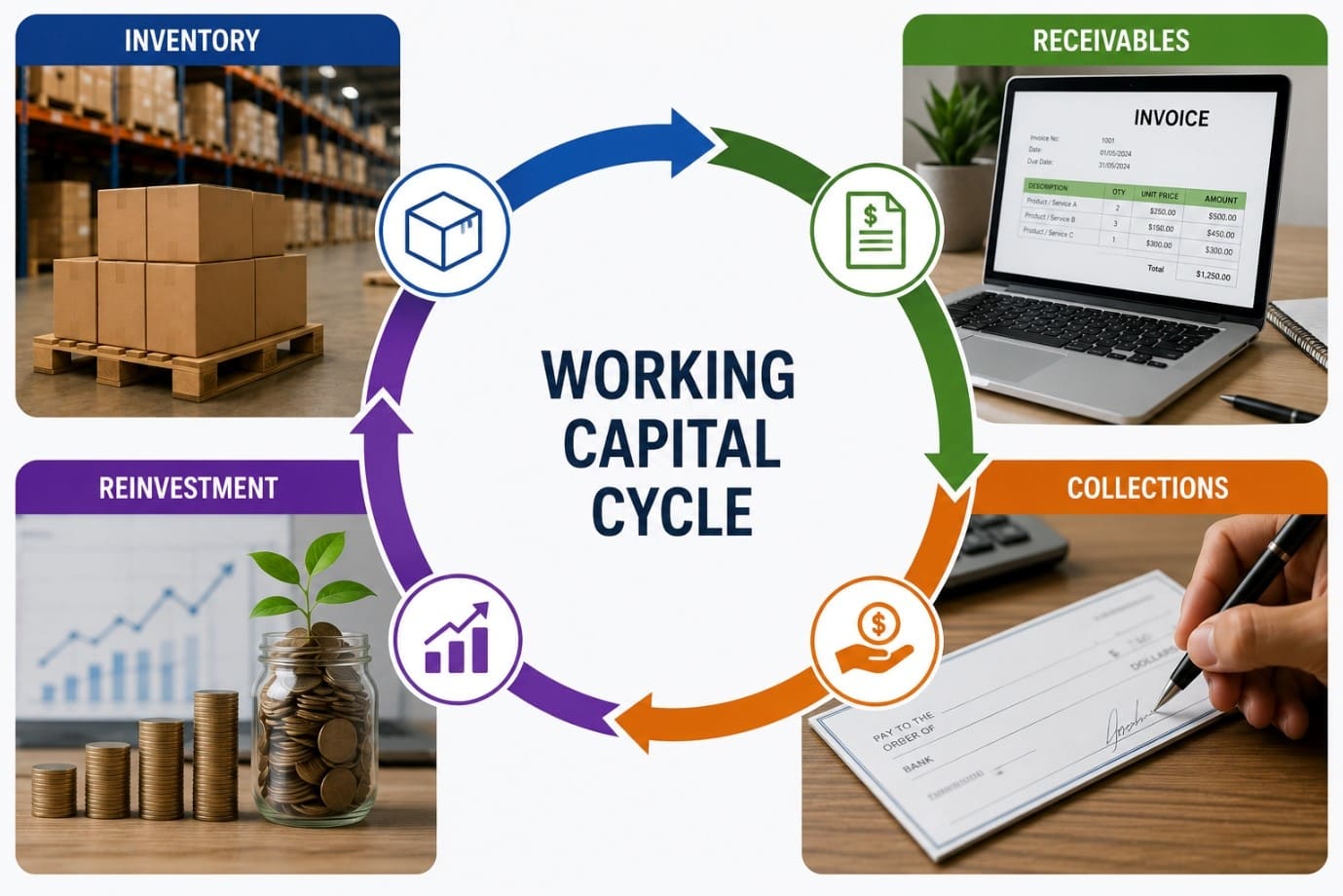
- Inventory: The cycle begins when a business invests its working capital in purchasing raw materials or inventory. Efficient inventory management helps reduce holding costs and prevents excess funds from being tied up unnecessarily.
- Receivables: Once products or services are sold on credit, the value is converted into accounts receivable. Managing customer credit terms effectively is crucial for reducing delays in cash realization.
- Collections: The next stage involves collecting payments from customers. Faster collections accelerate cash inflows, making calculation of working capital more predictable and improving liquidity. Delayed collections, on the other hand, can create cash flow constraints even for profitable businesses.
- Reinvestment: After collections are received, the cash is reinvested into inventory, operations, business expansion or debt repayment, restarting the cycle. This continuous movement of funds highlights why determining working capital requirements is essential for operational efficiency.
In simple terms, working capital equals the resources available to support this cycle without interruption. Businesses that effectively manage their working capital cycle can optimize cash flow, improve profitability and ensure sufficient funds are available to support both daily operations and future growth.
Common Working Capital Challenges
Managing working capital effectively is essential for maintaining liquidity and supporting business growth. However, many organizations face challenges that disrupt their working capital cycle and strain cash flow. Understanding these issues is the first step toward improving financial efficiency and achieving the objective of working capital management.
- Delayed Collections: Late customer payments can significantly impact cash flow and slow down the working capital cycle. Delayed collections make calculation more difficult and reduce the funds available for daily operations and growth initiatives.
- Excess Inventory: Holding excessive inventory ties up cash that could be used elsewhere in the business. While inventory forms part of gross working capital, poor inventory management can reduce liquidity and negatively affect working capital returns.
- Poor Forecasting: Inaccurate financial forecasts often result in cash shortages or excess idle funds. Proper forecasting is crucial for determining working capital requirements and maintaining an optimal level throughout the year.
- Overtrading: It occurs when a business expands faster than its available financial resources. Even profitable companies can face liquidity challenges when sales growth outpaces available working capital, leading to operational stress and funding gaps.
- High Debt Obligations: Excessive short-term debt increases financial pressure and reduces available cash. When current liabilities consistently exceed current assets, businesses may experience negative working capital, limiting their ability to meet short-term obligations.
Regardless of the type of working capital a business utilizes, addressing these challenges is critical because working capital equals the financial resources that keep operations running smoothly. Effective management helps improve liquidity, strengthen cash flow and support long-term business stability.
Working Capital Management
It refers to the process of managing a company’s current assets and current liabilities to ensure adequate liquidity and operational efficiency.
The primary objective is to maintain an optimal level of working capital, strengthen and ensure the smooth functioning of the working capital cycle. Effective management helps businesses meet short-term obligations, improve cash flow, reduce financial risks and support sustainable growth.
By continuously monitoring and optimizing working capital, organizations can enhance profitability while maintaining the financial flexibility needed to respond to changing business conditions. For detailed information, read our dedicated blog on Working Capital Management.
Strategies to Improve Working Capital
Optimizing working capital is essential for maintaining healthy cash flow, improving liquidity and supporting business growth. Since working capital equals the funds available to meet short-term obligations, businesses must adopt proactive strategies to maximize operational efficiency and strengthen their financial position.
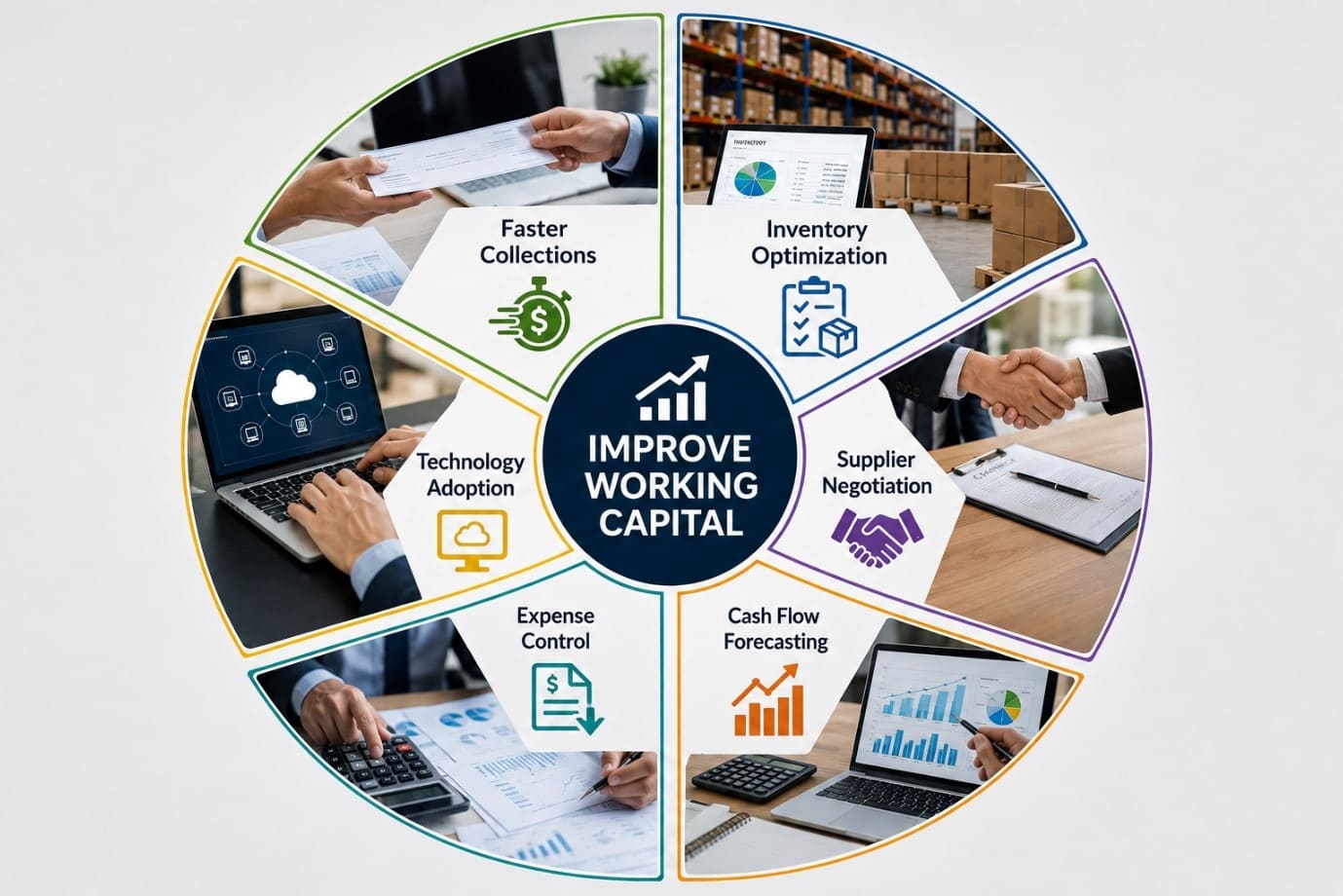
- Faster Collections: Accelerating customer payments is one of the most effective ways to improve working capital. Implementing clear credit policies, offering early payment incentives and regularly following up on outstanding invoices can shorten the working capital cycle and improve cash availability.
- Inventory Optimization: Excess inventory can tie up significant financial resources. Businesses should regularly review stock levels, eliminate slow-moving inventory and align purchasing decisions with demand forecasts. Improved inventory management can positively impact working capital and enhance overall efficiency.
- Supplier Negotiation: Negotiating favourable payment terms with suppliers can help businesses retain cash for longer periods. Extended credit terms allow organizations to better balance cash inflows and outflows without disrupting operations.
- Cash Flow Forecasting: Accurately forecasting working capital requirements enable businesses to anticipate future funding needs and avoid liquidity shortages. Regularly calculating and monitoring cash flow projections help management make informed financial decisions. Additionally, estimating future needs through estimated analysis supports effective business planning and growth. For comprehensive information, you can go through our dedicated blog on Cash Flow Forecasting.
- Expense Control: Controlling unnecessary expenses helps preserve cash and improve profitability. Effective cost management directly contributes to achieving the objective of working capital, which is maintaining an optimal balance between liquidity and operational efficiency.
- Technology Adoption: Modern accounting software, ERP systems, and financial dashboards simplify determining working capital requirements by providing real-time financial insights. Technology-driven reporting helps businesses monitor performance, improve decision-making and optimize working capital management for long-term success.
Key Working Capital Ratios and KPIs
Monitoring key financial ratios and KPIs helps businesses evaluate the efficiency of their working capital management and make informed financial decisions. While calculating working capital provides a snapshot of liquidity, these metrics offer deeper insights into operational performance and cash flow management.
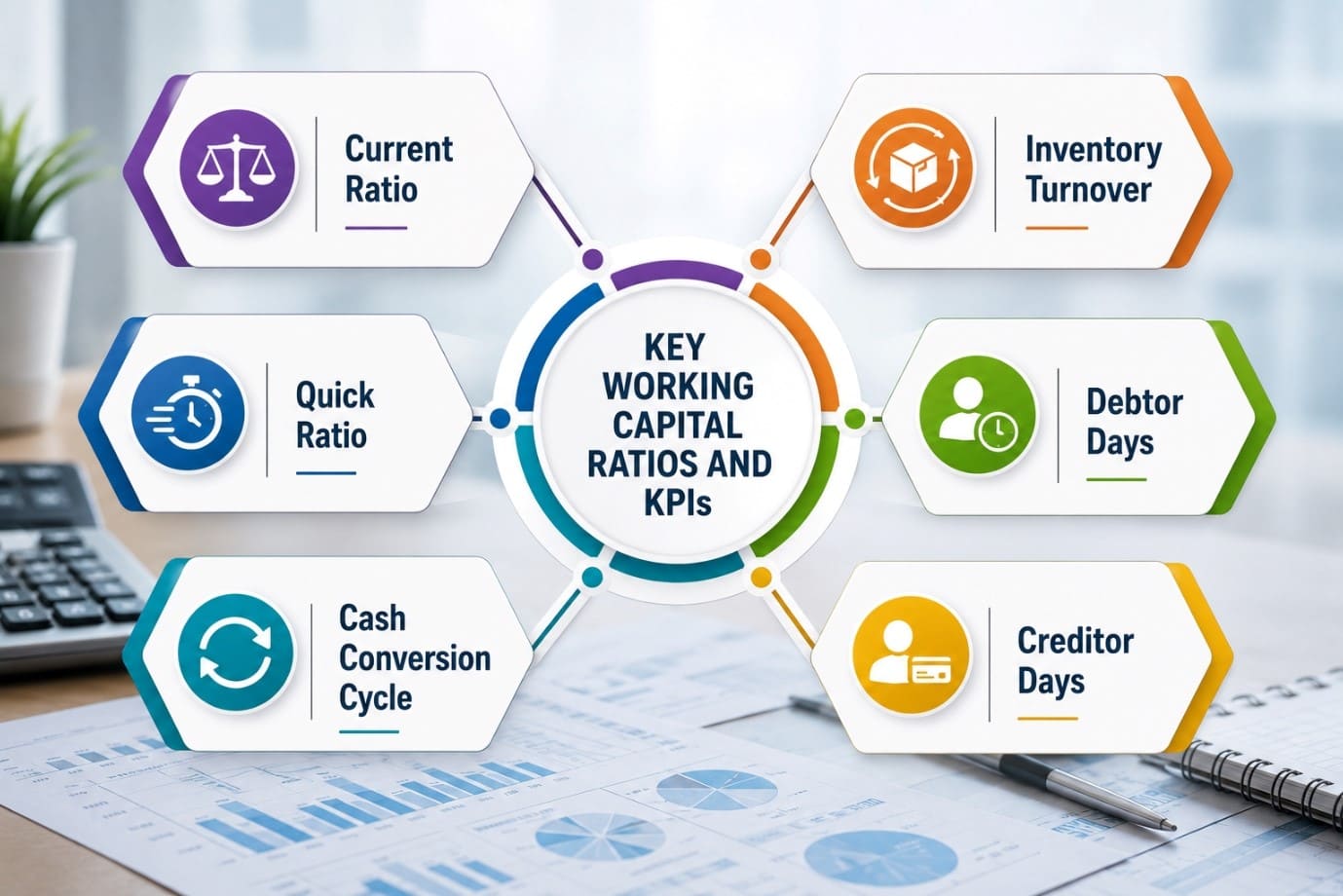

- Current Ratio: Measures a company's ability to meet short-term obligations using current assets and indicates the strength of its net working capital.
- Quick Ratio: Also known as the acid-test ratio, it assesses immediate liquidity by excluding inventory from current assets.
- Cash Conversion Cycle: Evaluates how quickly a business converts investments in inventory into cash, making it a critical indicator of the working capital cycle.
- Inventory Turnover: Measures how efficiently inventory is sold and replaced, helping improve working capital returns.
- Debtor Days: Indicates the average time customers take to pay outstanding invoices, assisting in determining working capital requirements.
- Creditor Days: Reflects the average payment period to suppliers, helping businesses optimize cash flow.
Regularly tracking these KPIs supports accurate planning, improves financial decision-making and ensures businesses maintain sufficient liquidity. Regardless of the type of working capital, these metrics help optimize operational efficiency and strengthen long-term financial performance.
Also Read: Cash Flow Management
Working Capital Financing Options
When internal funds are insufficient, businesses can leverage various financing options to maintain adequate working capital and ensure uninterrupted operations. Choosing the right funding source depends on business needs, the working capital cycle and future growth plans. Regularly calculating and determining working capital requirements also help identify the most suitable financing option.
- Working Capital Loans: Short-term loans designed to finance day-to-day operational expenses, purchase inventory or manage seasonal cash flow requirements while maintaining healthy net working capital.
- Overdraft Facilities: Banks allow businesses to withdraw funds beyond their account balance up to a sanctioned limit, providing immediate liquidity during temporary cash shortages.
- Invoice Financing: Businesses can raise funds against outstanding customer invoices, improving cash flow without waiting for payment collections.
- Trade Credit: Suppliers offer goods or services on credit, allowing businesses to defer payments and better manage their gross working capital.
- Supply Chain Financing: A financing arrangement that enables suppliers to receive early payments through financial institutions while buyers enjoy extended payment terms.
Selecting the appropriate financing solution depends on the type of working capital required and the business’s operational needs. Proper planning, including estimated analysis, helps organizations maintain liquidity, support expansion and ensure long-term financial stability.
Conclusion:
Maintaining healthy working capital is essential for ensuring business continuity, improving liquidity and achieving sustainable growth. It is much more than a financial metric, it reflects a company’s ability to meet short-term obligations, seize growth opportunities and navigate economic uncertainties. By understanding the types of working capital and managing the working capital cycle efficiently, businesses can strengthen their financial position and support long-term success.
Regularly calculating working capital enables organizations to assess their liquidity and make informed financial decisions. Maintaining an optimal level of net working capital while effectively utilizing gross working capital helps businesses balance operational requirements with growth objectives. In addition, monitoring working capital turns provides valuable insights into how efficiently financial resources are being used to generate revenue and maximize returns.
Successful businesses also focus on determining working capital requirements based on their operational needs, industry trends and future expansion plans. Through accurate estimated working capital analysis and proactive forecasting working capital, organizations can anticipate cash flow requirements, reduce financial risks and prepare for seasonal or unexpected business fluctuations. Ultimately, the objective of working capital is to maintain the right balance between liquidity, profitability and operational efficiency.
Regardless of the size or stage of a business, effective working capital management lays the foundation for financial resilience and sustainable growth. By adopting sound financial practices, regularly reviewing key performance indicators and making data-driven decisions, businesses can optimize cash flow, improve operational efficiency and build a stronger, more competitive future.
For more information, you can go to our Homepage.
Frequently Asked Questions (FAQs)
Q1. Why is calculating working capital essential for a business?
A. Calculating working capital helps businesses assess their financial health by determining whether they have sufficient current assets to cover short-term liabilities. It also supports better cash flow planning and informed financial decision-making.
Q2. What does net working capital indicate?
A. Net working capital indicates the liquidity position of a business by measuring the difference between current assets and current liabilities. A positive net working capital generally reflects a company’s ability to meet its short-term obligations efficiently.
Q3. What are the different types of working capital?
A. The main types of working capital include gross working capital, net working capital, permanent working capital, temporary working capital, positive working capital, negative working capital and operational working capital. Each type serves a different purpose in financial management.
Q4. How does the working capital cycle impact cash flow?
A. The working capital cycle tracks the movement of cash through inventory, sales, receivables, collections, and reinvestment. A shorter cycle improves liquidity, enhances cash flow and allows businesses to operate more efficiently.
Q5. Why is forecasting working capital important?
A. Forecasting working capital helps businesses estimate future cash requirements, prepare for seasonal fluctuations, avoid liquidity shortages and make proactive financial decisions that support sustainable growth.


Leave A Comment