

What is Bookkeeping?
In today’s competitive business environment, maintaining accurate financial records is no longer optional, it’s a necessity. Whether you are a start-up, small business or established enterprise, effective bookkeeping helps you track income, expenses, assets and liabilities while ensuring compliance with financial and tax regulations. A well-structured bookkeeping system provides business owners with a clear picture of their financial health, enabling them to make informed decisions and plan for sustainable growth.

At its core, bookkeeping is the process of recording, organizing and maintaining all financial transactions of a business. Every bookkeeping entry, from sales invoices and purchase bills to payments and receipts, contributes to creating reliable financial records. Depending on the size and complexity of a business, organizations may use single entry or double entry bookkeeping methods to manage their accounts efficiently. A skilled bookkeeper ensures that these records are accurate, up-to-date and readily available whenever needed.
One of the most common misconceptions is that bookkeeping and accounting are the same. While closely related, bookkeeping focuses on recording financial transactions, whereas accounting involves analysing, interpreting and reporting financial data for strategic decision-making. Understanding this distinction is essential for businesses seeking effective financial management.
If you’ve ever wondered what is bookkeeping, this blog will provide a comprehensive overview of the process, different types of bookkeeping systems, their benefits and why they form the foundation of successful business operations.
Understanding Bookkeeping
It is the systematic process of recording, organizing, and maintaining a business’s financial transactions. It serves as the foundation of financial management by ensuring that every sale, purchase, payment and receipt is accurately documented. The primary purpose of bookkeeping is to create reliable financial records that help businesses monitor their financial performance and meet regulatory requirements.
A well-defined bookkeeping process involves tracking daily transactions, categorizing financial data and maintaining updated records for future reference. A professional bookkeeper plays a crucial role in ensuring the accuracy and consistency of these records, helping businesses avoid errors and make informed decisions.
An efficient bookkeeping system not only simplifies financial record-keeping but also provides valuable insights into cash flow, profitability and overall business health. By maintaining accurate financial information, businesses can improve operational efficiency, support strategic planning and ensure long-term growth.
The Importance of Bookkeeping for Businesses
Regardless of the size or industry, every business relies on accurate financial records to operate efficiently and achieve long-term success. Effective bookkeeping helps organizations maintain financial transparency, meet compliance requirements and make informed strategic decisions. A well-structured bookkeeping system not only supports day-to-day operations but also provides valuable insights into business performance and growth opportunities.

Let’s explore the key reasons why the bookkeeping process is essential for every business.
Accurate Financial Tracking
One of the primary objectives of bookkeeping is to maintain a complete and accurate record of all financial transactions. Every bookkeeping entry related to sales, purchases, expenses and payments is systematically recorded, allowing businesses to monitor their income and expenditures effectively. Whether a company follows single entry or double entry bookkeeping, maintaining organized financial records helps track cash flow, identify spending patterns and assess overall financial health.
Compliance with Tax Regulations
Accurate bookkeeping plays a critical role in ensuring compliance with tax laws and financial regulations. Proper records simplify GST filings, income tax preparation and statutory reporting requirements. An experienced bookkeeper ensures that all financial transactions are documented correctly, reducing the risk of penalties, filing errors and compliance issues. Well-maintained records also improve audit readiness by providing clear and verifiable financial information whenever required.
Improved Business Decision-Making
Reliable financial data generated through the bookkeeping process enables businesses to make informed decisions based on facts rather than assumptions. Understanding what is bookkeeping and implementing an effective system allows business owners to prepare budgets, forecast future revenues, evaluate investment opportunities and allocate resources more efficiently. Accurate financial insights support both short-term planning and long-term business strategies.
Business Performance Evaluation
A strong bookkeeping framework helps businesses measure and analyse their performance over time. By reviewing financial records regularly, organizations can assess profitability, manage operational costs and identify areas for improvement. Whether managed through double entry bookkeeping or other accounting methods, consistent financial tracking provides valuable data for measuring growth, improving efficiency and supporting sustainable business expansion.
How Does Bookkeeping Work?
Understanding what is bookkeeping becomes easier when you look at how the process functions in a business environment. The bookkeeping process involves systematically recording, organizing, and maintaining financial information to ensure accurate financial management. Whether a business uses single entry or double entry bookkeeping, the goal remains the same: to create reliable financial records that support compliance, reporting and decision-making.
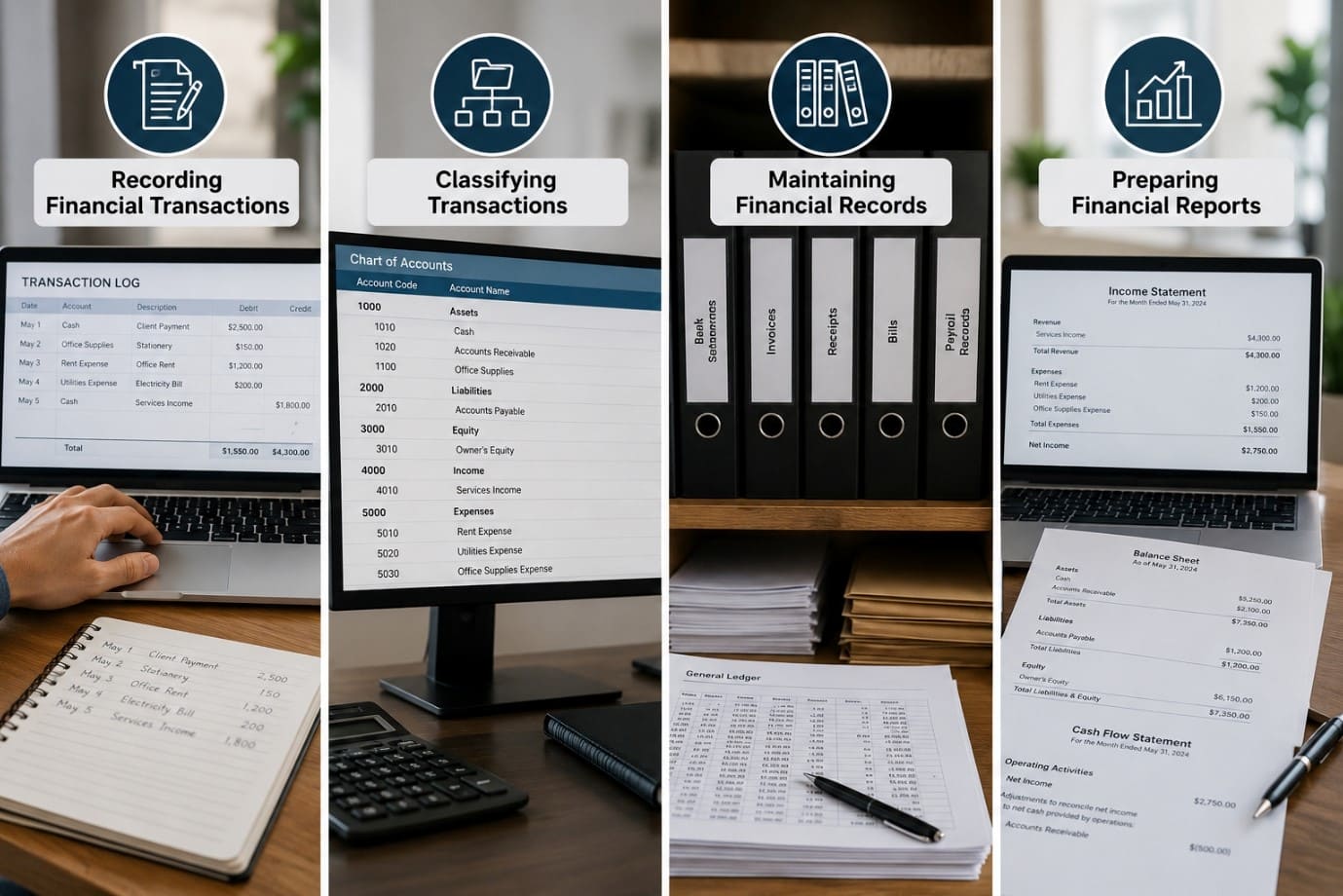
The following steps explain how an effective bookkeeping system works.
Recording Financial Transactions
The first step in bookkeeping is recording all financial activities as they occur. Every entry is documented to create a complete record of business transactions. These transactions typically include sales revenue, purchases of goods or services, customer receipts, supplier payments and other financial activities. Accurate transaction recording ensures that no financial information is overlooked and forms the foundation of reliable accounting records.
Classifying Transactions
Once transactions are recorded, they are categorized into specific financial accounts. A bookkeeper classifies each transaction under assets, liabilities, revenue, expenses or equity. Proper classification helps businesses understand their financial position and simplifies the preparation of financial statements. In double entry bookkeeping, every transaction affects at least two accounts, ensuring greater accuracy and financial control.
Maintaining Financial Records
After classification, transactions are stored and organized within journals, ledgers and modern accounting platforms. A well-maintained bookkeeping system ensures that financial data remains accurate, accessible and up to date. Today, many businesses use digital accounting software to streamline the bookkeeping process, reduce manual errors and improve efficiency.
Preparing Financial Reports
The final stage of bookkeeping involves generating financial reports that provide insights into business performance. These reports include the Profit and Loss Statement, Balance Sheet and Cash Flow Statement. By maintaining accurate records through a structured bookkeeping process, businesses can evaluate performance, monitor financial health and make informed strategic decisions with confidence.
Types of Bookkeeping Systems
A bookkeeping system provides the framework for recording and managing a company’s financial transactions. The choice of system depends on the size, complexity and financial requirements of the business. Understanding what is bookkeeping also involves understanding the different methods used to maintain financial records. The two most commonly used systems are single entry bookkeeping and double entry bookkeeping.
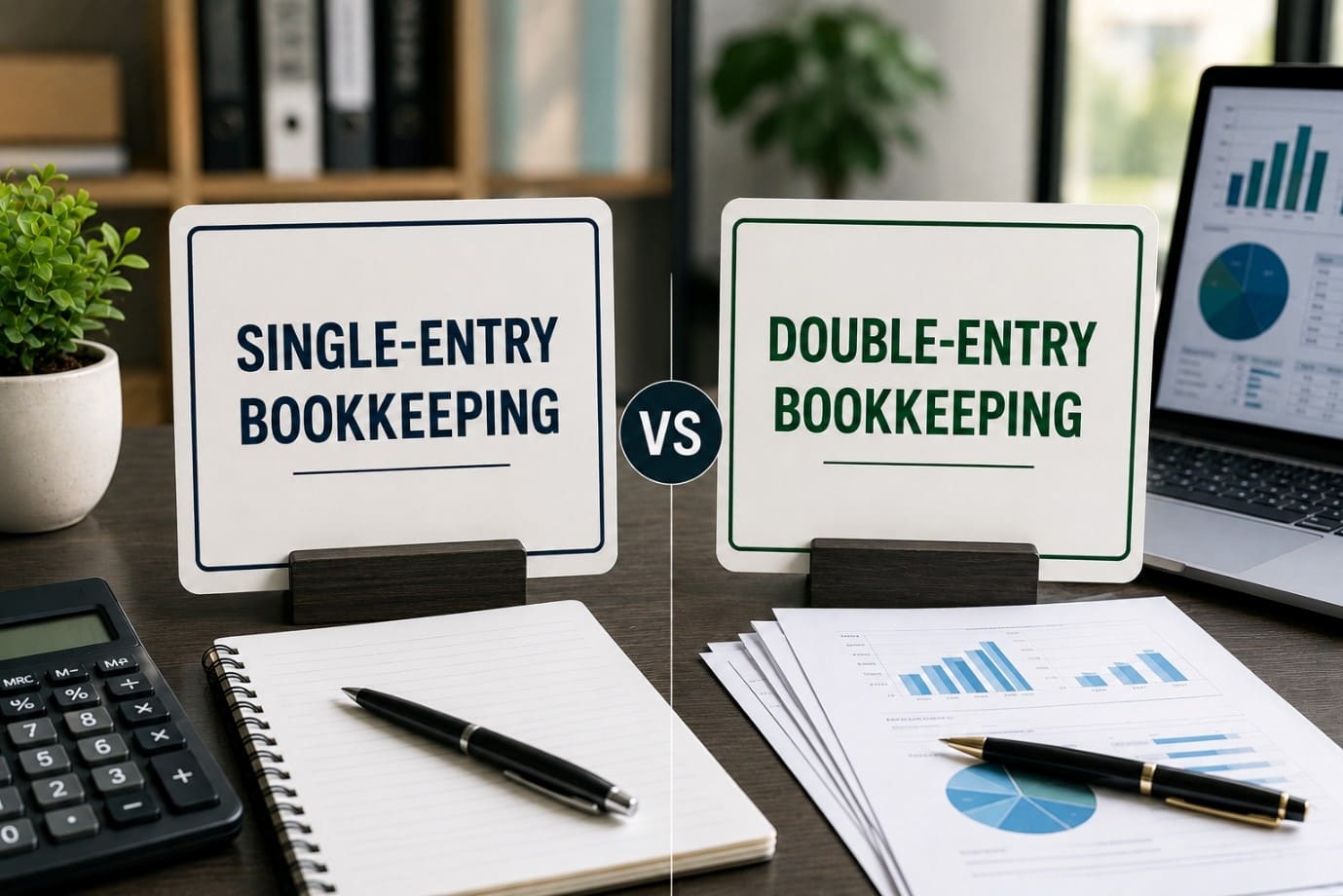
Single-Entry Bookkeeping
It is the simplest form of bookkeeping and works similarly to maintaining a check book or cash register. Under this method, each entry is recorded only once, typically as income or expense. It focuses primarily on cash inflows and outflows rather than providing a complete picture of the business’s financial position.
The main advantage of single entry bookkeeping is its simplicity and ease of use. It requires less time, fewer resources and minimal accounting knowledge, making it suitable for freelancers, sole proprietors and very small businesses with limited transactions. However, this method has limitations, as it does not effectively track assets, liabilities or equity and may not provide accurate financial insights for growing businesses.
Double-Entry Bookkeeping
It is a more comprehensive and widely accepted bookkeeping system. In this method, every entry affects at least two accounts, with one account being debited and another credited. This approach creates a balanced and accurate record of all financial transactions.
A skilled bookkeeper uses double entry bookkeeping to maintain greater accuracy, reduce errors and improve financial transparency. The system enables businesses to generate detailed financial statements, monitor assets and liabilities and maintain compliance with accounting standards. Due to its reliability and ability to provide a complete financial overview, double entry bookkeeping is preferred by most businesses and forms the foundation of an effective bookkeeping process.
Key Bookkeeping Tasks Every Business Should Perform
An effective bookkeeping system involves much more than simply recording financial transactions. To maintain accurate financial records and ensure smooth business operations, several essential tasks must be performed consistently. Whether a business follows single entry or double entry bookkeeping, these activities form the foundation of a successful process and contribute to better financial control and decision-making.
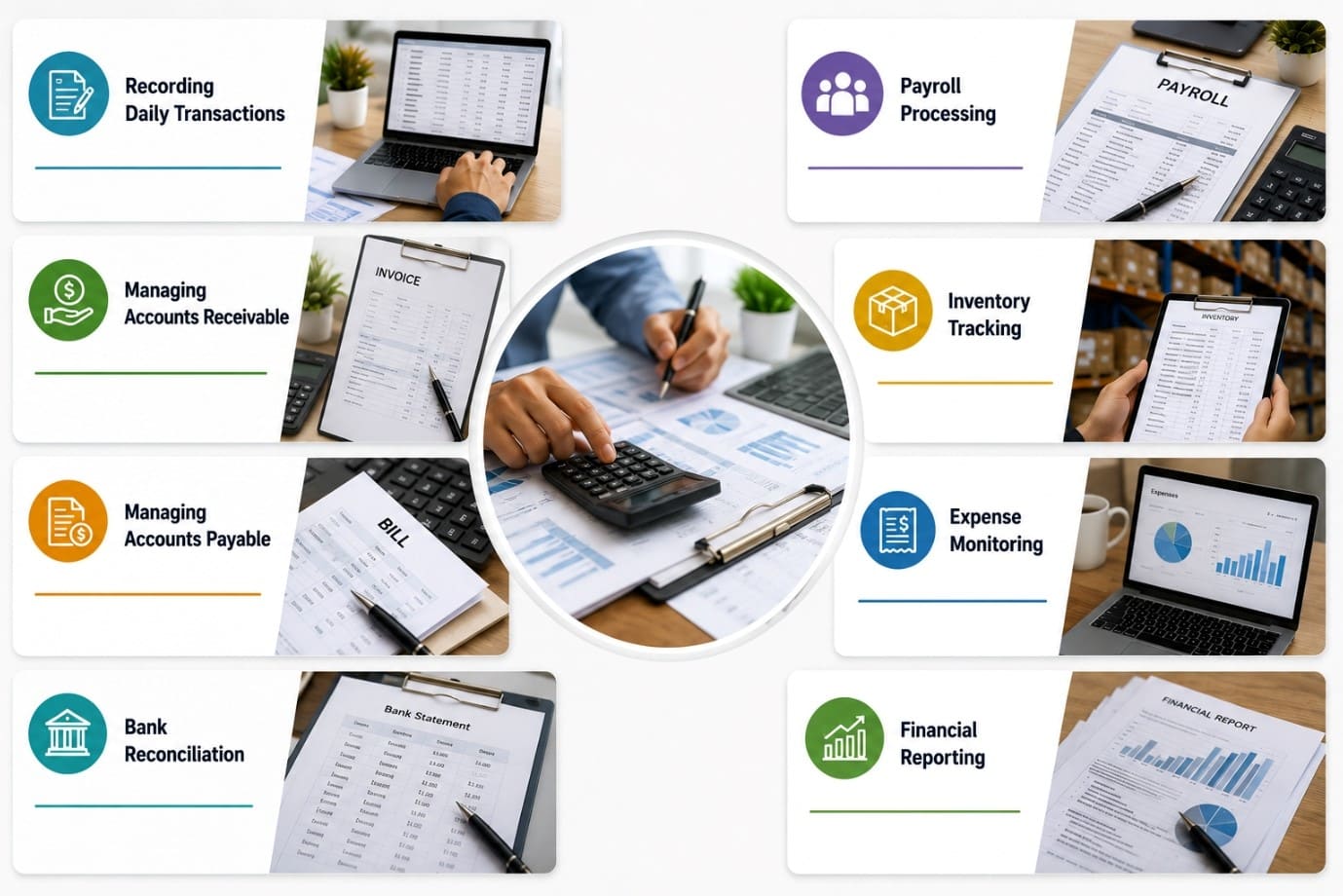
- Recording Daily Transactions: The most fundamental aspect of bookkeeping is recording daily financial activities. Every entry, including sales, purchases, receipts and payments, should be documented accurately and quickly to maintain reliable records.
- Managing Accounts Receivable: Businesses must track outstanding customer invoices and incoming payments. Effective management of accounts receivable helps improve cash flow, reduce delayed payments and maintain healthy customer relationships.
- Managing Accounts Payable: Monitoring supplier invoices and payment obligations is equally important. A skilled bookkeeper ensures bills are paid on time, helping businesses avoid penalties, maintain vendor trust and manage working capital efficiently.
- Bank Reconciliation: Bank reconciliation involves comparing internal financial records with bank statements to identify discrepancies. This critical bookkeeping process helps detect errors, prevent fraud and ensure the accuracy of financial data.
- Payroll Processing: Managing employee salaries, benefits, deductions and tax withholdings is another key responsibility within bookkeeping. Accurate payroll processing ensures compliance with labour and tax regulations while maintaining employee satisfaction.
- Inventory Tracking: For businesses dealing with physical goods, inventory tracking is essential. A well-maintained bookkeeping system helps monitor stock levels, inventory costs and product movement, reducing losses and improving operational efficiency.
- Expense Monitoring: Regularly tracking business expenses allows organizations to control costs, improve budgeting and identify opportunities for savings and increased profitability.
- Financial Reporting: The final stage of the bookkeeping process involves generating reports such as profit and loss statements, balance sheets and cash flow statements. These reports provide valuable insights into business performance and help stakeholders better understand what is bookkeeping and its role in achieving long-term financial success.
Benefits of Professional Bookkeeping Services
Managing financial records requires accuracy, consistency and expertise. While many business owners understand what is bookkeeping, handling it internally can be time-consuming and challenging. Professional bookkeeping services help businesses maintain a reliable system, improve financial management and focus on core business activities. Here are some of the key benefits of hiring a professional bookkeeper.
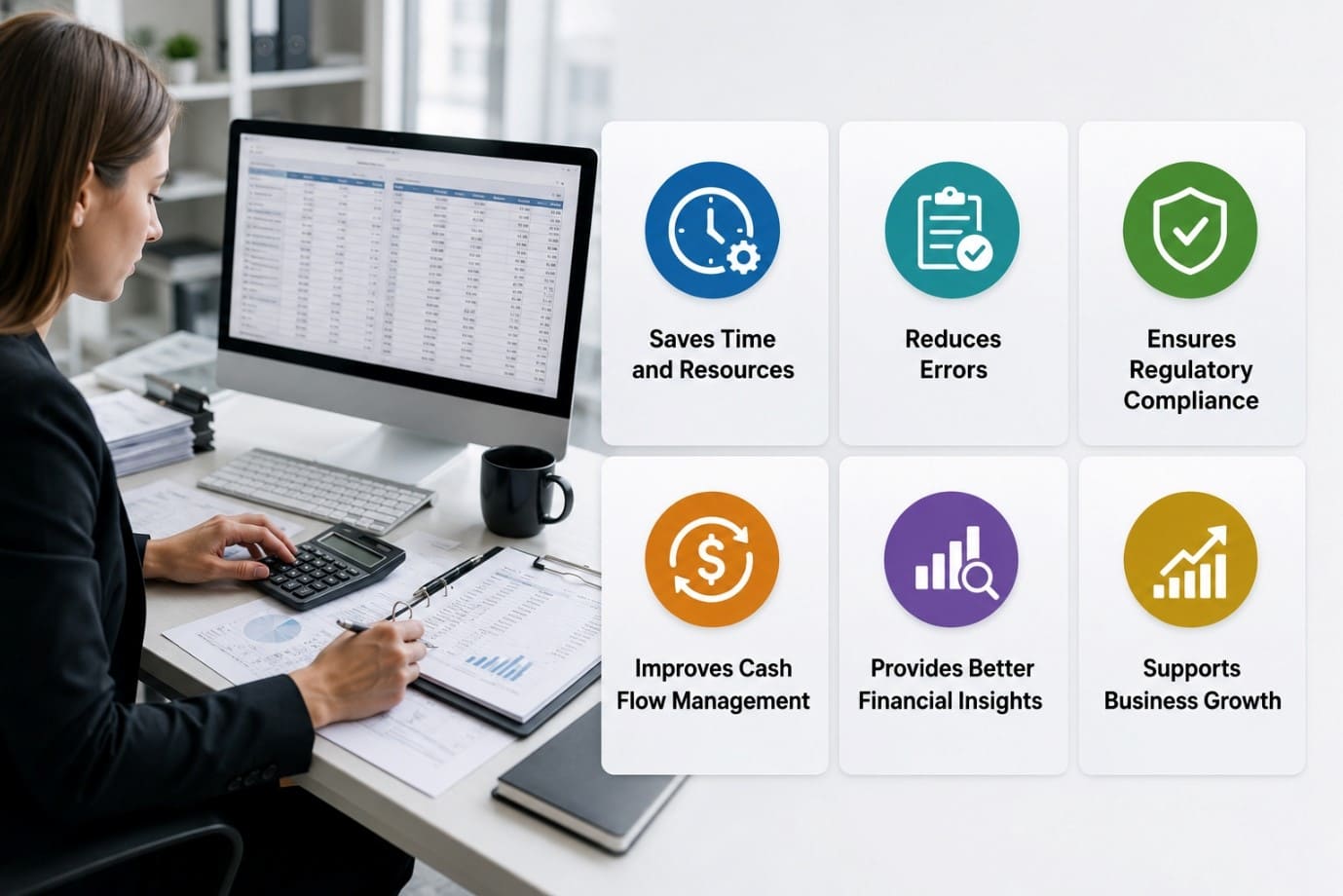
- Saves Time and Resources: Outsourcing bookkeeping allows business owners and management teams to focus on growth-oriented activities rather than spending valuable time managing financial records. A professional bookkeeper efficiently handles every entry, reducing administrative burdens and improving productivity.
- Reduces Errors: Financial mistakes can lead to inaccurate reporting and costly consequences. Professional bookkeeping services ensure that transactions are recorded correctly using established accounting practices such as double entry bookkeeping, minimizing errors and improving record accuracy. You can also read our dedicated blog on Bookkeeping and Accounting errors.
- Ensures Regulatory Compliance: A structured bookkeeping process helps businesses stay compliant with tax laws, GST regulations and statutory requirements. Accurate financial records simplify tax preparation, support audits and reduce the risk of penalties due to non-compliance.
- Improves Cash Flow Management: Effective bookkeeping provides a clear view of incoming and outgoing funds. By monitoring accounts receivable, accounts payable and cash balances, businesses can maintain healthy cash flow and make better financial decisions. For more information, read our in-depth blog on Cash Flow Management.
- Provides Better Financial Insights: A well-maintained bookkeeping system generates accurate financial reports that help business owners understand profitability, expenses and overall financial performance. These insights support informed decision-making and strategic planning.
- Supports Business Growth: Whether a company uses single entry bookkeeping or a more advanced double entry bookkeeping method, professional financial record management creates a strong foundation for growth. Accurate financial data helps businesses secure funding, manage expansion and achieve long-term success with confidence.
Common Bookkeeping Mistakes Businesses Should Avoid
Even businesses that understand what is bookkeeping can make mistakes that affect financial accuracy, compliance and decision-making. An ineffective process can lead to cash flow issues, tax complications and unreliable financial reports. Avoiding common bookkeeping errors is essential for maintaining a strong financial foundation and ensuring long-term business success.
- Mixing Personal and Business Finances: One of the most common bookkeeping mistakes is using the same accounts for personal and business transactions. This creates confusion, complicates tax reporting and makes it difficult to track actual business performance. Maintaining separate accounts ensures a more organized bookkeeping system.
- Delaying Transaction Recording: Postponing the recording of transactions often results in missing information and inaccurate financial records. Every bookkeeping entry should be recorded promptly to maintain up-to-date financial data and avoid errors during reporting and reconciliation.
- Ignoring Bank Reconciliation: Failing to regularly reconcile bank statements with internal records can lead to discrepancies, duplicate entries or undetected fraud. Bank reconciliation is a critical part of the bookkeeping process that helps ensure financial accuracy and transparency.
- Poor Documentation Management: Missing invoices, receipts and supporting documents can create compliance issues and make audits more challenging. A well-organized bookkeeping system requires proper storage and management of financial records for easy access and verification.
- Not Reviewing Financial Reports Regularly: Many business owners generate financial reports but rarely analyse them. Regularly reviewing reports helps identify trends, control expenses and assess profitability. Whether using single entry or double entry bookkeeping, financial reports provide valuable insights into business performance.
- DIY Bookkeeping Without Expertise: Managing bookkeeping without adequate knowledge can result in costly mistakes and compliance risks. A qualified bookkeeper understands accounting principles, maintains accurate records and ensures that financial transactions are recorded correctly. For growing businesses, professional expertise often provides greater accuracy, efficiency and peace of mind than attempting to handle bookkeeping independently.
Modern Bookkeeping: Technology and Automation
The evolution of technology has transformed bookkeeping from a manual, paper-based activity into a streamlined and highly efficient digital process. Modern businesses are increasingly adopting automated tools and cloud-based solutions to improve the accuracy, accessibility and efficiency of their bookkeeping system. These innovations help businesses manage financial records more effectively while reducing the workload of a bookkeeper.
Cloud-Based Accounting Software
It has become an essential component of modern bookkeeping. These platforms allow businesses to record, store and access financial data securely from anywhere at any time. Whether managing a simple bookkeeping entry or overseeing a complex double entry bookkeeping framework, cloud solutions simplify the entire bookkeeping process and improve collaboration between business owners, accountants and financial teams. For in-depth information, you can read our detailed blog on Cloud Accounting.
Benefits of Automated Bookkeeping
- Real-Time Financial Tracking: Automation enables businesses to monitor transactions as they occur, providing immediate visibility into financial performance. This real-time approach helps business owners better understand what is bookkeeping and make timely financial decisions.
- Enhanced Accuracy: Automated systems reduce manual data entry and minimize human errors. Whether using single entry or double entry bookkeeping, automation helps ensure financial records remain accurate and consistent.
- Better Reporting and Analytics: Modern bookkeeping systems generate detailed financial reports and analytics automatically. These insights help businesses evaluate profitability, monitor cash flow, identify trends and make data-driven decisions that support long-term growth.
Should You Outsource Your Bookkeeping?
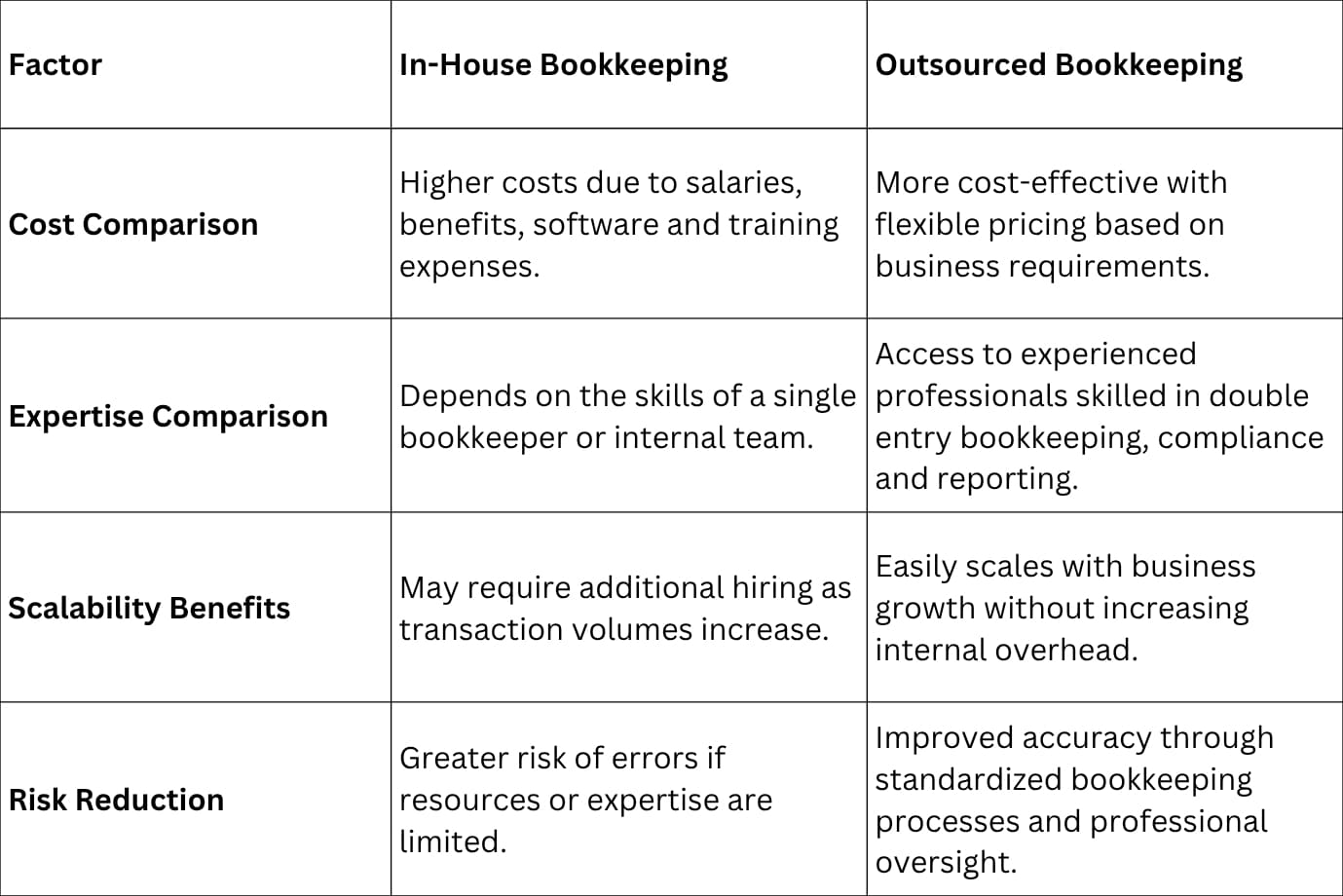
As businesses grow, managing bookkeeping internally can become increasingly time-consuming and complex. While some organizations maintain an in-house bookkeeper, many are turning to outsourced solutions to improve efficiency, accuracy and cost management. Outsourcing allows businesses to access experienced professionals, advanced technology and a reliable bookkeeping system without the expense of hiring a full-time team. Understanding what is bookkeeping and evaluating your business needs can help determine the most suitable approach.
In-House vs Outsourced Bookkeeping

When Outsourcing Makes Sense
Outsourcing is often the ideal choice for start-ups, SMEs and growing businesses that need accurate financial records without the cost of a dedicated finance department. Whether your business uses single entry bookkeeping or a more advanced double entry bookkeeping approach, outsourcing can streamline every entry, improve compliance and provide valuable financial insights that support sustainable growth. For comprehensive information related to outsourcing accounting, you can go through our dedicated page on Accounting outsourcing services.
Conclusion:
Understanding what is bookkeeping is essential for any business that aims to achieve financial stability, maintain compliance and support long-term growth. As the foundation of financial management, bookkeeping ensures that every entry is accurately recorded, organized and maintained, providing businesses with a clear and reliable view of their financial position. From tracking daily transactions and monitoring cash flow to preparing financial reports and supporting tax compliance, a structured bookkeeping process plays a vital role in the success of any organization.
Whether a business uses single entry bookkeeping for basic record-keeping or adopts double entry bookkeeping for greater financial accuracy and control, maintaining an effective bookkeeping system is crucial for informed decision-making. Accurate financial records help businesses identify growth opportunities, manage expenses, improve profitability and respond proactively to financial challenges.
However, maintaining consistent and error-free bookkeeping requires time, expertise and attention to detail. As businesses expand, financial management becomes more complex, making professional support increasingly valuable. An experienced bookkeeper can help ensure compliance, improve reporting accuracy and streamline financial operations, allowing business owners to focus on strategic priorities rather than administrative tasks.
Investing in professional bookkeeping practices is not just about keeping records, it’s about building a strong financial foundation that supports sustainable growth and business success. For start-ups, SMEs and growing enterprises, outsourcing bookkeeping can be a practical and cost-effective solution. By partnering with experienced professionals, businesses can gain access to expert financial management, advanced technology and scalable support that enhances efficiency, reduces risks and drives long-term value.
For more information, you can explore our Homepage.
Frequently Asked Questions (FAQs)
Q1. What is bookkeeping in simple terms?
A. Bookkeeping is the process of recording, organizing and maintaining a business’s financial transactions. Every entry, such as sales, purchases, receipts and payments, is documented to create accurate financial records. A well-managed bookkeeping system helps businesses track their financial activities and maintain financial transparency.
Q2. What is the main purpose of bookkeeping?
A. The primary purpose of bookkeeping is to maintain accurate and up-to-date financial records. An effective process helps businesses monitor income and expenses, manage cash flow, prepare financial reports and comply with tax regulations. Proper bookkeeping also supports informed decision-making and long-term business growth.
Q3. What is the difference between bookkeeping and accounting?
A. While bookkeeping and accounting are closely related, they serve different purposes. Bookkeeping focuses on recording and organizing financial transactions through every bookkeeping entry, whereas accounting involves analysing, interpreting and reporting financial data. A bookkeeper maintains financial records, while accountants use those records to provide financial insights and strategic recommendations. For detailed information, you can read our detailed blog on Bookkeeping vs Accounting.
Q4. Can bookkeeping be outsourced?
A. Yes, bookkeeping can be outsourced to professional service providers. Outsourcing allows businesses to access experienced bookkeeper services without hiring a full-time employee. Professional outsourcing helps improve the bookkeeping process, reduce errors, maintain compliance and provide accurate financial reporting while allowing business owners to focus on growth.
Q5. How does bookkeeping support business growth?
A. Bookkeeping provides accurate financial information that helps business owners evaluate profitability, manage costs, forecast future performance and identify growth opportunities. A strong bookkeeping system creates the financial foundation needed for strategic planning, expansion and long-term success.


Leave A Comment